
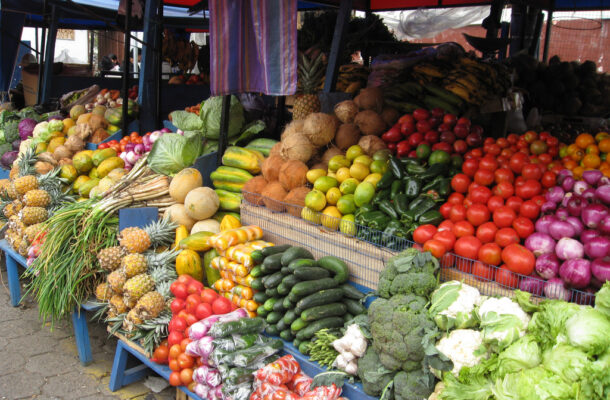
The government has set aside GH¢100 million in 2025 to strengthen the National Food Buffer Stock Company (NAFCO) and protect Ghana’s food reserves against potential emergencies.
The allocation, outlined in the Ministry of Food and Agriculture’s Medium-Term Expenditure Framework (2025–2028), will be used to purchase and store essential commodities to ensure availability during crises and market disruptions.
According to the ministry, the move underscores government’s commitment to food security and recognition of NAFCO’s critical role in stabilising prices, preventing shortages, and supporting broader efforts to modernise agriculture, promote agribusiness, curb food inflation, and build national resilience.
Last year, NAFCO’s capacity was tested when Ghana relied on external assistance from the Economic Community of West African States (ECOWAS) to secure grain for domestic consumption. In September, ECOWAS donated 500 metric tonnes of maize, rice, millet, and sorghum to eight drought-affected regions under its Regional Food Security Reserve programme.
Agriculture stakeholders say the episode highlighted the urgent need for robust local reserves. At the inauguration of a nine-member NAFCO board in June, Food and Agriculture Minister Eric Opoku described the situation as “less than ideal.”
“This exposed the fragility of our food security system. Going forward, we want a new narrative. In times of crisis, the buffer stock should be able to say: ‘We have 10,000 or 20,000 tonnes of maize, rice or soybeans ready to stabilise the market,’” he said.
Opoku stressed the need for proactive interventions — purchasing surplus food during harvest, storing it to stabilise prices, and releasing it during lean seasons or emergencies to curb market hikes. Part of the GH¢100 million allocation, he added, will directly support these operations to prepare for future shocks.
Comments