
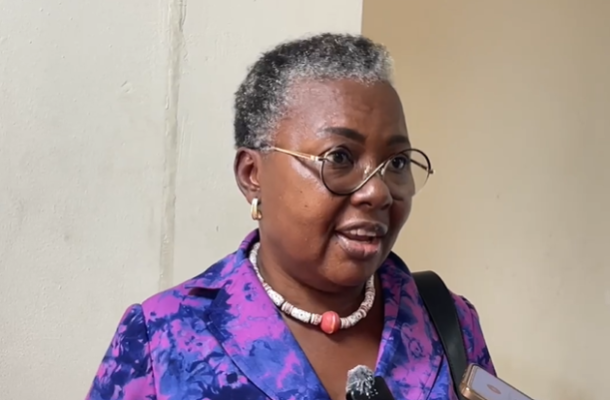
The Minister for Fisheries and Aquaculture, Emelia Arthur, has explained that the government’s decision not to implement the closed fishing season last year was driven by the need to balance marine conservation with the economic realities of fisherfolk.
Speaking to the media in Parliament after the Ministry’s appearance before the Public Accounts Committee, she acknowledged that while the policy is essential for sustaining fish stocks, it also places a heavy financial burden on fishing communities.
“The closed season is intended to protect and replenish fish stocks, but we are equally mindful of the impact such a decision has on fishermen and their families,” she stated.
Balancing conservation and livelihoods
According to the Minister, concerns about the hardship the policy would impose on fisherfolk informed the decision to suspend it last year.
She noted that many artisanal fishermen depend on daily catches for survival, making prolonged fishing bans particularly challenging.
Policy under review
Ms Arthur disclosed that the Ministry is currently reviewing the framework of the closed season policy to identify more inclusive and sustainable approaches.
This includes stakeholder engagement and exploring alternative interventions to cushion affected communities against income losses during such periods.
Future implementation
She added that ongoing efforts are focused on designing a system that maximises benefits—both in preserving marine ecosystems and protecting livelihoods.
Any future implementation, she said, will take into account broader socio-economic factors to ensure fairness and effectiveness.
Ongoing debate
The closed fishing season, introduced in recent years to curb overfishing and allow fish stocks to regenerate, has remained a contentious issue among industry players.
Reaffirming government’s position, the Minister stressed its commitment to safeguarding Ghana’s marine resources while ensuring that policies remain sensitive to the needs of coastal communities.
Comments