
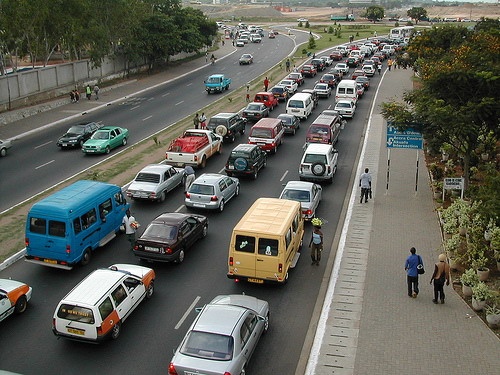
The Ghana Private Road Transport Union (GPRTU) has attributed the ongoing public transport challenges in Accra primarily to severe traffic congestion during peak morning and evening hours.
According to the Union, persistent gridlock in the capital is limiting the number of trips commercial drivers can make, preventing them from returning to transport terminals on time and resulting in long queues and delays for commuters at major stations.
Speaking in an interview with the Ghana News Agency, National Chairman of the GPRTU, Nana Nimako Asiamah, dismissed claims that commercial drivers were deliberately creating artificial shortages to justify fare hikes.
“As far as the GPRTU is concerned, we are not creating any artificial scarcity. The major challenge is the traffic situation in Accra, which is seriously affecting transport operations,” he stated.
He explained that congestion is particularly acute during mornings and evenings, making it difficult for drivers to complete multiple trips and pick up more passengers.
His comments come against the backdrop of concerns raised by government officials that unlawful practices by some private transport operators had contributed to the transport crisis in the capital.
The Minister of Government Communications, Felix Kwakye Ofosu, had alleged that certain drivers were intentionally creating artificial shortages during peak periods to compel commuters to pay higher fares, despite recent reductions in fuel prices and an agreed 15 per cent cut in approved transport fares.
The minister cited instances where drivers avoided designated terminals and instead roamed parts of the city in search of passengers willing to pay above-approved fares, describing such conduct as illegal and vowing government action against offenders.
Responding to these concerns, Nana Asiamah acknowledged that the GPRTU had received reports of such practices and assured that the Union would take disciplinary action against any member found engaging in them.
However, he noted that the lack of proper identification on some commercial vehicles makes it difficult to determine whether offending drivers belong to the GPRTU or other transport unions.
He therefore called on government to collaborate with transport unions to establish a reliable vehicle identification system to support enforcement efforts.
“We are ready to engage the government and work with other transport unions to find lasting solutions to the challenges,” Nana Asiamah said.
Comments