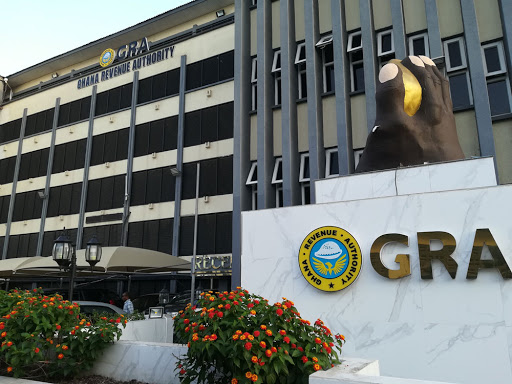
The Ghana Revenue Authority (GRA) has announced an ambitious plan to onboard eight million new taxpayers as part of a nationwide strategy to broaden the country’s tax base and strengthen domestic revenue mobilisation.
The initiative, unveiled in Accra, will be driven by two flagship programmes — the Sustained Tax Education Programme and the Modified Taxation Scheme (MTS) — both aimed at simplifying compliance and increasing participation, particularly within the informal sector.
According to the GRA, the expansion could generate up to GH¢40 billion in additional domestic revenue over the next few years if fully implemented.
Commissioner-General Anthony Kwasi Sarpong described the plan as one of the Authority’s most transformative revenue initiatives to date, noting that it aligns with government’s broader goal of achieving fiscal sustainability and reducing dependence on external financing.
“The Modified Tax Scheme has immense potential. If we can successfully bring about two million new taxpayers into the system each year, we will significantly enhance domestic revenue and advance national development,” Mr. Sarpong stated.
He explained that Ghana’s informal sector — comprising an estimated eight million economically active individuals and small businesses — remains largely untapped but offers the greatest opportunity to expand the tax base.
Under the first phase, the GRA plans to register two million new taxpayers annually over the next three years, before scaling up in subsequent phases.
The Authority said the initiative combines simplified registration processes, targeted public education, and digital tax tools to make compliance more convenient and transparent.
Mr. Sarpong added that the expected revenue gains will provide vital funding for government’s priority programmes, while helping stabilise the economy and reduce the country’s reliance on borrowing.
He urged citizens, businesses, and civil society partners to actively support the GRA’s modernisation efforts, stressing that a robust and inclusive tax system is key to Ghana’s long-term development.
“This is not just a GRA project — it is a national mission to build a fair, efficient, and self-reliant economy,” he said.
Comments