
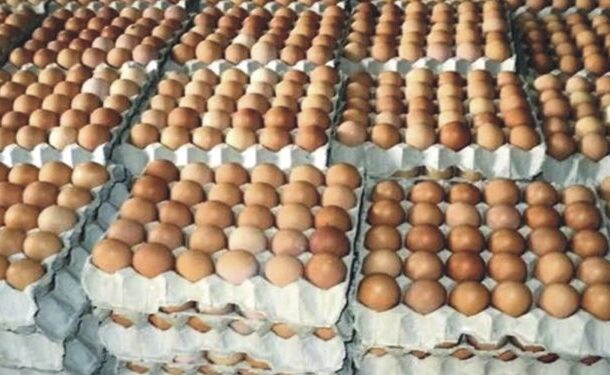
The Greater Accra Poultry Farmers Association has raised concerns over increasing foreign involvement in Ghana’s poultry sector, warning that it is contributing to an egg surplus that is affecting local producers and threatening worker salaries and investments.
According to the Association, the industry, which showed strong promise earlier this year, began to experience a sharp decline in June when farms, particularly those in Sunyani, started recording rising egg surpluses.
Ali Mohammed, CEO of the Association, said about 38,000 crates of eggs remain unsold. He attributed the situation to growing participation by foreign traders—especially Chinese investors—who he claims are outcompeting local producers.
“I believe every sector in the economy has defined participation rules. I cannot just go to India, China, or Ethiopia today and establish a poultry farm without regulations being checked. The retail sector here is meant for locals. Foreign participation must follow clear rules, but these investors come with huge capital and make it hard for locals to compete fairly,” Mohammed said, noting that major poultry farms in areas such as Asutuare and Fetteh are already affected.
The severity of the crisis was evident during a visit to Blessed Farms, which houses 1,500 birds and produces around 30 crates of eggs daily. Owner Marian Mensah said declining demand has made it difficult to sustain operations and meet daily expenses.
“These days, customers say the eggs from outside are cheaper. The Chinese traders are spoiling our market. They sell big crates for GH¢40-45, while we produce quality eggs that cost more because of feed. If they don’t buy, I can’t make money or take care of my family,” she lamented.
Employees are also feeling the impact. Rita Doglo Venyuye, who works at Blessed Farms, fears delays in her salary due to slow sales. “Two weeks into November, it has been difficult. My payment may be delayed because sales haven’t generated enough funds,” she said.
Other sector players warn that more farms could collapse if the trend continues. Jerry Otoo Larkai of Larkai Farms, which also manages 1,500 birds, said: “Many farmers have even sold off their birds because they can’t afford feed. If eggs are rotting on farms and birds still need feeding, it’s a huge challenge. I can count about 10–15 farms that have already shut down.”
Although President John Mahama has directed schools to procure local rice, maize, chicken, and eggs, the Association says it is awaiting final implementation guidelines. The farmers are calling for stronger government intervention to safeguard local poultry businesses.
“We are following up with the Buffer Stock to understand how they intend to purchase from our members. Will schools in the Central Region, for instance, buy from farmers within that region? These details are crucial,” Ali Mohammed added.
Comments