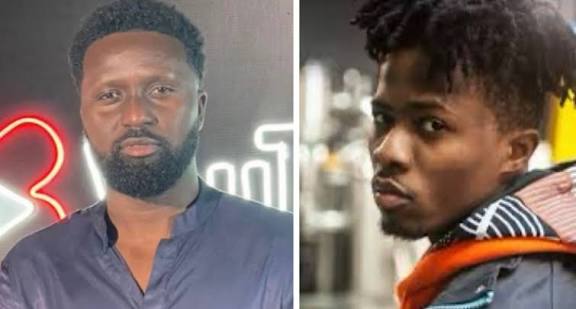
One of the most music collectives, Ground Up Chale, and its founder Glen Boateng have escalated their dispute with award-winning rapper Kwesi Arthur to the High Court in Accra, following a wave of controversial accusations made by the artist online.
The company has filed a writ of summons accusing the musician of libel and is seeking damages exceeding GH₵10 million over statements that have sparked intense debate about artist-label relationships in the country’s music industry.
The legal action, filed on 27 January 2026, asks the court to declare a series of comments made by Kwesi Arthur as defamatory and damaging to the reputation of both the company and its founder.
Ground Up Chale is also requesting that the court compels the removal of the posts, restrains the rapper from making further similar remarks, and orders a public apology and retraction to be issued with the same prominence as the original publications.
At the heart of the lawsuit are statements Kwesi Arthur posted on Instagram and X on 21 January 2026, in which he raised serious allegations about his treatment during his time with the label.
In the posts, the rapper claimed he was being asked to pay $150,000 simply for using images of himself in an independent project.
He further alleged that Ground Up Chale “claims to own me, my image, my music, and everything attached to it from 2016 to this day.”
Kwesi Arthur also made the striking claim that he had “not made a dime from any of my music” while working under the collective.
He accused management of manipulation, threats, and deliberate attempts to block the release of his current music.
The most alarming of the allegations suggested personal danger, as he warned that if anything happened to him, Glen Boateng and members of the Ground Up Chale team should be held responsible.
The posts quickly triggered widespread public reaction, dominating social media conversations and drawing attention from music industry observers who questioned issues of contract fairness and artist rights in Ghana.
Supporters of the rapper rallied behind him, pushing hashtags such as #FreeKwesiArthur, while others called for transparency in how labels manage creatives.
In response, Ground Up Chale’s lawsuit is demanding that Kwesi Arthur permanently deletes the disputed posts and any related content across his social media platforms.
The company is also seeking an injunction to prevent him, or anyone acting on his behalf, from further circulating defamatory statements. Additionally, the suit requests that an apology—approved by the plaintiffs—be published publicly.
The damages being pursued are significant. Ground Up Chale is asking for general damages of GH₵5 million, special damages of GH₵2 million for economic losses and missed business opportunities, and aggravated and exemplary damages of GH₵3 million, alongside legal costs.
Ground Up Chale’s lawyer, Jonathan K. Amable, has already publicly challenged key aspects of Kwesi Arthur’s claims.
Amable argued that the company never restricted the artist from using his personal images broadly, but rather sought to protect visuals and footage produced by the label during their contractual relationship.
He also cited email correspondence suggesting that Kwesi Arthur did, in fact, receive substantial earnings, including royalties worth £91,370 and payments from distribution agreements.
According to the lawyer, the contract signed in 2017 granted Ground Up Chale ownership rights over materials created during that period, forming the basis of the current dispute.
Kwesi Arthur’s rise to stardom is closely linked to Ground Up Chale, after he was signed in 2017 and emerged as one of the defining voices of the modern hip-hop scene.
Through hit songs like Grind Day and Winning, he became an influential figure among younger audiences and a symbol of the new wave of Ghanaian music.
Comments