
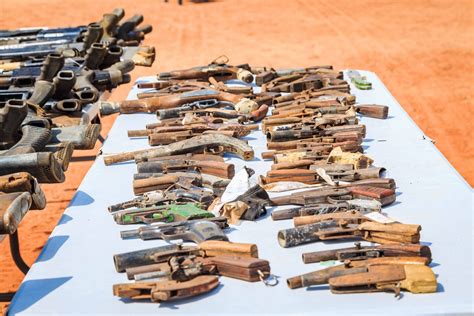
The Executive Secretary of the National Commission on Small Arms and Light Weapons (NACSA), Dr. Adam Bonaa, has revealed that thousands of illegal firearms and large quantities of ammunition have been voluntarily surrendered nationwide as Ghana’s ongoing gun amnesty enters its final 15 days.
Speaking on Joy News on Monday, December 29, Dr. Bonaa said the exercise has recorded significant success, with recoveries made across all 16 administrative regions and the country’s 25 police regions.
“With just 15 days to the deadline, a number of these weapons have been surrendered, and there are more to recover,” he said, expressing confidence that additional firearms will be handed in before the amnesty ends on January 15, 2026.
Dr. Bonaa explained that the amnesty declaration also introduced temporary restrictions to support the exercise, including a halt to the importation and sale of firearms and ammunition, as well as a ban on the firing of weapons during the period.
“Within this period, the importation of arms and ammunition has ceased, the sale of guns and ammunition has ceased, and the firing of weapons has also been prohibited,” he stated.
According to him, the weapons surrendered so far include sidearms, pump-action shotguns, single- and double-barrel guns, AK-47s, M16 rifles and G-series firearms.
The nationwide gun amnesty was declared by the Minister for the Interior, Muntaka Mubarak, who designated December 1, 2025, to January 15, 2026, as a grace period for individuals to surrender or register illegal firearms without fear of arrest or prosecution.
The initiative forms part of government efforts to improve public safety and curb the proliferation and misuse of small arms and light weapons.
Dr. Bonaa urged individuals still in possession of illegal firearms to take advantage of the remaining days of the amnesty, warning that enforcement would be intensified after the deadline.
He said anyone found in possession of illegal weapons after January 15, 2026, would face the full force of the law as security agencies move to sustain the gains made during the amnesty period.
Comments