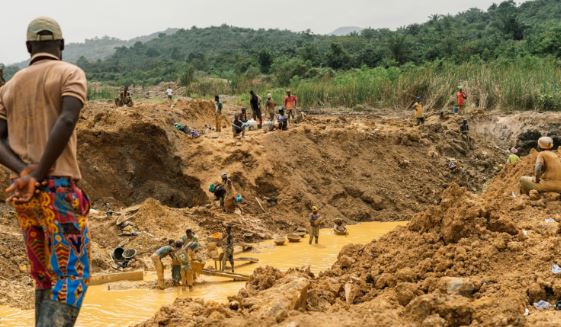
The Ghana Water Limited (GWL) and the Electricity Company of Ghana (ECG) have cited the devastating effects of illegal mining (galamsey) as a major factor behind their proposed over 200 percent increase in utility tariffs under the 2025–2030 Multi-Year Tariff Order.
According to the two state utilities, the widespread environmental destruction caused by galamsey has severely impacted their operations, leading to rising costs in water treatment and power distribution.
The Ghana Water Limited explained that the pollution of water bodies by illegal mining has made water treatment more expensive, forcing the company to spend far more on purification chemicals and plant maintenance to ensure safe water supply.
Similarly, the Electricity Company of Ghana reported that illegal mining activities have damaged sections of its power distribution infrastructure, especially lines passing through forest reserves and mining zones, resulting in frequent outages and higher maintenance costs.
Speaking during public hearings on the proposed tariff adjustments in the Ashanti Region, ECG’s Director of Communications, William Boateng, said illegal miners often dig near roads and trenches where power poles are located, destabilizing them.
“They are digging and moving towards the roads and trenches, which is very dangerous. Anytime it rains, the poles come down because the base has been weakened. That affects the stability of power supply,” he explained.
Mr. Boateng added that the damage sometimes leads to chain collapses of multiple poles, creating widespread outages that are costly to fix.
“It costs us more money to replace the fallen poles and restore supply. Beyond that, we lose unserved energy — power that has already been purchased but cannot be delivered to customers,” he said.
Both GWL and ECG stressed that tackling the environmental destruction caused by galamsey is essential to ensuring affordable, sustainable, and reliable water and electricity supply for Ghanaians in the years ahead.
Comments