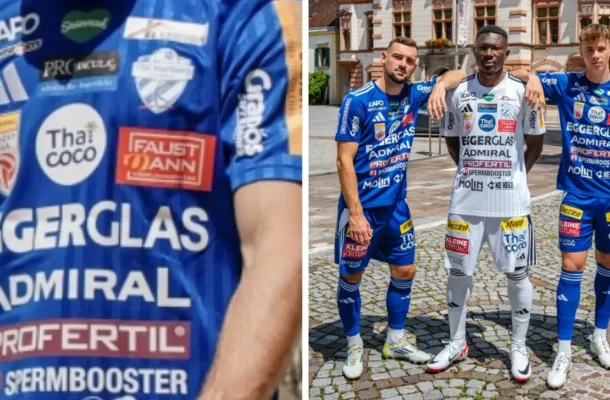
Austrian Bundesliga club TSV Hartberg have once again unveiled a kit overloaded with sponsorships for the 2025–26 season, maintaining their controversial record-breaking branding approach.
Local media outlets and kit analysts report that the club features around 19 to 20 different brand logos on every piece of their uniform—from the main shirt and sleeves to shorts and socks. The design has drawn both criticism and fascination online for resembling a professional cycling jersey more than a football kit.
For a club based in a town of under 7,000 residents, Hartberg operates with tight finances. Club officials have confirmed that such a commercial strategy—accepting dozens of smaller sponsors—is necessary to stay afloat in Austria’s top flight. Unlike many clubs reliant on a single major backer, Hartberg spreads the burden across numerous local businesses.
Among the many brands, Profertil – billed as the “#1 sperm booster”—stands out prominently. Owned by Lenus Pharma, this fertility supplement also lends its name to Hartberg’s stadium, the Profertil Arena Hartberg. The club president, Brigitte Annerl, happens to be the founder of Lenus Pharma, underlining the close ties between the club and the sponsor.
Other visible sponsors include Eggerglas, Admiral Sportwetten, Kühlanlagen Postl, Steiermark, PROMACULA, Alois Schweighofer GmbH, Faustmann Möbel, and more. Logos also extend to the back of the kit, shorts, and even the socks, in keeping with the club's no-limits philosophy toward sponsorship placement.
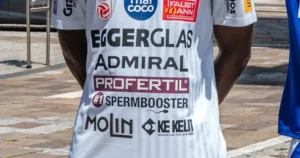
This summer’s kit has been estimated to feature 19 or 20 logos, including sleeve and sock branding. It appears to surpass last season’s total, which was also said to host up to 19 sponsors.
The kit has gone viral among fans and social media users, many poking fun at its cluttered design. On Reddit, users joked about the absurdity of kits plastered with sperm-booster branding and compared the outfit to motorsport uniforms more than football strips.
However, local supporters and club officials argue it’s a pragmatic response to limited merchandise sales and small local support base. As one club spokesperson said, without these sponsors Hartberg would struggle to exist in the Bundesliga.
There are no limits in the Austrian league regarding how many sponsors can appear on kits, aside from regulations on logo size and placement of league and manufacturer insignia. Legal restrictions do prevent certain categories—like alcohol or tobacco—but Hartberg’s sponsors comply with existing norms.
Hartberg may have finished mid-table in the 2024–25 Bundesliga and host fewer than 5,000 fans in their home games. Yet their kit has given them a global spotlight few Austrian clubs enjoy. In an era when visibility counts for recruitment, commercial appeal, and brand recognition, Hartberg’s marketing gamble keeps paying off—even if their jersey looks like an advertising scramble.
Comments