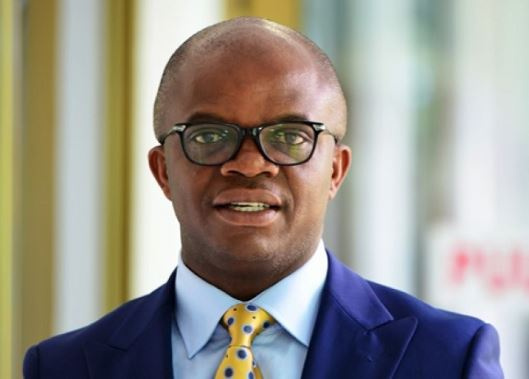
Former Deputy Finance Minister, Hon. Stephen Amoah, A.K.A Sticker has expressed regret over the government’s decision to undertake a debt restructuring program during the Nana Addo Dankwa Akufo-Addo administration, acknowledging the hardship it caused many Ghanaians.
Speaking in an interview on Oyerepa TV, the Member of Parliament for Nhyiaeso said he fully understands the frustrations of those whose investments and savings were affected by the Domestic Debt Exchange Programme (DDEP).
He, however, emphasized that the move was unavoidable given the state of Ghana’s economy at the time.
“I understand the sentiments of those affected and sincerely apologize for the debt restructuring under the Nana Addo administration,” he stated. “But it was the only option to stabilize the economy. We simply had no other choice.”
The debt restructuring, which formed part of Ghana’s broader economic recovery measures, saw the government exchange existing bonds for new ones with revised interest rates and maturity dates.
While officials described the initiative as a “painful but necessary” step toward restoring fiscal stability, it triggered significant public backlash, particularly from pensioners and individual bondholders who suffered major financial losses.
Hon. Amoah noted that while the policy’s implementation was politically costly and personally difficult to defend, it was crucial to prevent the economy from collapsing entirely.
“If we hadn’t taken that bold decision, the country would have faced a total shutdown—no salaries, no imports, and no creditworthiness,” he explained.
He also acknowledged that the New Patriotic Party (NPP) suffered politically from the public anger that followed the exercise, which many analysts believe contributed to the party’s defeat in the 2024 general elections.
“Ghanaians were hurting, and understandably, they blamed us,” Amoah admitted. “But history will show that it was a necessary sacrifice to rebuild a broken system.”
The former Deputy Minister’s comments come amid renewed debates about the country’s economic recovery path and whether alternative policies could have achieved similar results with less pain
. Nonetheless, Amoah maintained that the Akufo-Addo administration acted in good faith and with the long-term stability of the nation in mind.
“Sometimes leadership means taking decisions that are unpopular today but essential for the future,” he concluded. “We did what was right for Ghana, even if it cost us politically.”
Comments