
The International Energy Agency (IEA) has warned that the ongoing war in the Middle East is causing what it describes as the largest supply disruption in the history of the global oil market.
According to the agency, major oil-producing countries including Iraq, Qatar, Kuwait, the United Arab Emirates and Saudi Arabia have collectively cut oil production by at least 10 million barrels per day.
Global oil markets have since experienced significant volatility following airstrikes launched by the United States and Israel against Iran on February 28. The tension pushed Brent crude prices close to US$120 per barrel earlier this week.
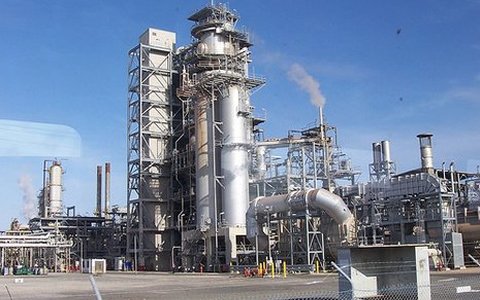
Amid the global supply uncertainty, the Tema Oil Refinery (TOR) has stated that it has the technical capacity to refine Ghana’s domestically produced crude oil, dismissing claims that the country’s only refinery cannot process crude from Ghana’s offshore oil fields.
According to TOR, technical studies and crude oil assays have confirmed that Ghana’s light sweet crude, particularly from the Jubilee and TEN fields, is compatible with the refinery’s current processing configuration.
The refinery explained that it can efficiently process the crude to produce refined petroleum products required for the local market, including gasoline, diesel, jet fuel, kerosene and other petroleum derivatives.
TOR noted that it previously processed crude oil from the TEN field in 2016, providing evidence that the facility can handle locally produced crude.
The clarification comes amid public debate over whether the refinery is technically equipped to process crude from Ghana’s offshore fields.
Currently, Ghana exports the bulk of its crude oil from the Jubilee, TEN and Sankofa fields, while importing refined petroleum products to meet domestic fuel demand.
TOR resumed crude oil processing in late 2025 after several years of inactivity caused by financial challenges, accumulated debts and aging infrastructure. The refinery is presently operating below its full capacity as it gradually increases production following maintenance work and operational stabilisation.
Management says efforts are underway to restore full capacity and undertake upgrades aimed at expanding processing capability and strengthening the refinery’s role in Ghana’s downstream petroleum industry.
Refining crude locally, TOR noted, will provide several economic and strategic benefits, including reducing dependence on imported petroleum products, enhancing national energy security and conserving foreign exchange that would otherwise be used for fuel imports.
In addition, domestic refining is expected to promote value addition within Ghana’s petroleum sector and support broader industrial growth. TOR maintains that it remains committed to playing a key role in the country’s energy sector.
Comments