
The Importers and Exporters Association of Ghana (IEAG) has raised concerns over plans to introduce an Artificial Intelligence (AI)-based system at the country’s ports, even as it commended government for significant gains in customs revenue mobilisation and overall macroeconomic stability in 2025.
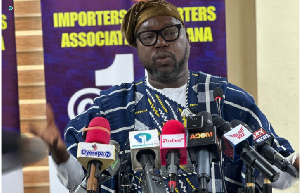
At a press conference held at the Ghana International Press Centre in Accra on Thursday, December 18, 2025, the Executive Secretary of the Association, Samson Asaki Awingobit, said the IEAG supports efforts to modernise port operations but stressed that any digital reforms must be transparent, credible and fully aligned with Ghana’s existing customs architecture, particularly the Integrated Customs Management System (ICUMS).
Presenting the Association’s year-in-review of port activities, Mr Awingobit disclosed that customs revenue increased markedly in 2025, reaching US$3.179 billion as of September, compared to US$3.108 billion recorded in 2024. He attributed the growth to improved trade facilitation measures and the continued rollout of ICUMS, despite some technical challenges earlier in the year.
He further noted that operational initiatives such as the 24-hour port operations policy have boosted cargo throughput and enhanced the competitiveness of the Tema Port within the West African sub-region.
Beyond port operations, the IEAG also applauded broader macroeconomic improvements, including the removal of the one per cent COVID-19 levy, VAT adjustments, relative exchange rate stability, declining inflation and lower interest rates. According to the Association, these developments have contributed to reducing the cost of doing business for importers and exporters, while improving investor confidence.
Despite these gains, the Association cautioned against reports of a proposed AI-driven port system allegedly to be implemented by Truedare Investments Limited, a Cyprus-registered company. Mr Awingobit said publicly available information does not indicate that the firm has the requisite expertise or proven experience in port automation or AI-based customs solutions.
The IEAG expressed particular concern that the proposed system would reportedly depend heavily on ICUMS data, which it described as a critical national asset containing sensitive information on customs declarations, trade values and revenue records. Granting access to such data to a newly incorporated foreign entity, the Association warned, raises serious questions about data sovereignty, cybersecurity, system duplication, possible revenue leakages and increased costs for traders.
The Association therefore called for extensive stakeholder consultations, assured compatibility with ICUMS, robust safeguards to protect data ownership and a clear strategy for building the capacity of Ghanaian customs and technical personnel to manage advanced port technologies locally.
While reaffirming confidence in Ghana’s improving business environment, the IEAG urged government to exercise due diligence and uphold transparency in decisions that affect the country’s critical digital infrastructure at the ports.
“This approach is essential to ensure that Ghana’s trade systems remain secure, resilient and globally competitive,” Mr Awingobit said.
Comments