
The Importers and Exporters Association of Ghana (IEAG) has defended the Bank of Ghana (BoG) against recent criticisms, describing some public commentary as lacking technical context, while praising the central bank’s policies for the strong recovery of the Cedi and improved trade conditions in 2025.
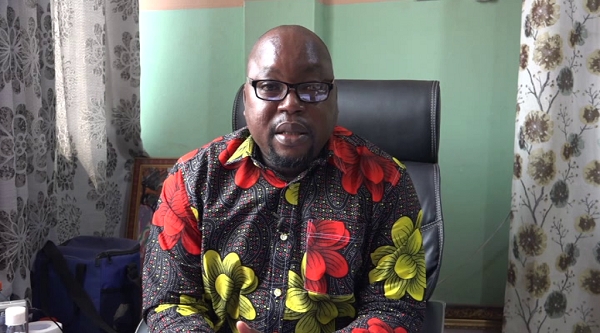
Speaking at a media engagement and New Year event in Accra on Saturday, January 3, the Executive Secretary of the Association, Samson Asaki Awingobit, said reports on alleged losses by the BoG and the Ghana Gold Board had “clouded public appreciation” of the central bank’s strategic role in stabilising the economy.
“While robust public discourse is vital in a democratic society, we at IEAG believe that some negative reportage has lacked context and technical nuance, ultimately clouding public appreciation of the BoG’s strategic contributions to economic stability, growth, and the Cedi’s performance,” he stated.
According to IEAG, Ghana’s currency experienced a significant turnaround in 2025 following earlier depreciation, appreciating strongly due to coordinated policy interventions and increased market confidence.
“By mid-2025, the Cedi had strengthened by over 40 percent against the US dollar, significantly easing the cost of imports and reducing exchange-rate induced pressures on traders,” Mr. Awingobit noted, adding that the stronger Cedi provided direct relief for importers reliant on foreign inputs and finished goods for domestic distribution and manufacturing.
The Association attributed the currency’s performance to improved foreign exchange buffers and a rebound in export earnings, with gross international reserves rising to over $11 billion by mid-2025—equivalent to nearly five months of import cover.
“These outcomes demonstrate that Ghana’s macroeconomic groundwork, anchored by robust monetary policy, has restored confidence and enhanced stability in foreign exchange markets,” the IEAG Executive Secretary said.
Mr. Awingobit emphasized that the Cedi’s appreciation was the result of deliberate policy choices rather than chance. “The observable strengthening of the Cedi reflects disciplined monetary policy, improved market confidence, and heightened foreign exchange market activity that supported stronger market fundamentals,” he said.
He further highlighted that strong export performance, including trade surpluses and an estimated 60 percent growth in export earnings in early 2025, helped ease pressure on the local currency and reduced the cost of doing business.
The Association also publicly commended the BoG for its steady stewardship during a challenging economic period.
“While no institution operates without challenges, the technical, statistical, and observable outcomes speak to a central bank that has been purposeful in supporting macroeconomic resilience, trade continuity, and currency stability,” Mr. Awingobit added.
Looking ahead, IEAG expressed optimism about Ghana’s economic prospects in 2026, urging continued prudent monetary policy and stronger engagement between policymakers and the private sector to sustain confidence and expand trade volumes.
The Association also appealed to the media to provide balanced and informed reporting on economic matters, particularly those affecting currency stability and key state institutions.
“Your continued support in accurate, contextual reporting is invaluable to building Ghana’s economic narrative,” Mr. Awingobit concluded.
Comments