
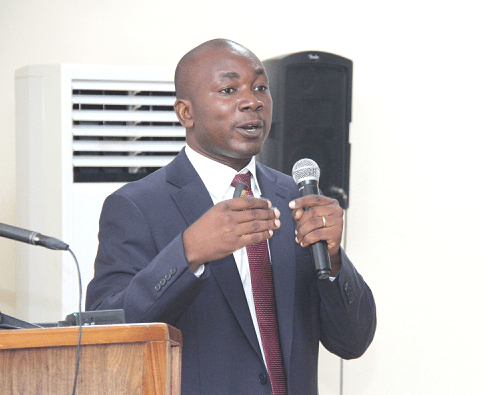
Economist Professor Godfred Bokpin has said that Ghana’s three-month extension of its International Monetary Fund (IMF) programme is necessary to ensure a clean, credible, and orderly exit, describing the move as widely anticipated.
Speaking on the IMF Staff Report following the Fund’s Executive Board approval of Ghana’s fifth programme review, Professor Bokpin explained that the extension—shifting the programme’s end date from May to August—was requested by the Ghanaian authorities themselves. “The request for the programme itself had to come from the Ghana government, and that is why we say it is an IMF-supported programme,” he noted.
The economist said policymakers had long recognized that additional time would be needed to properly conclude the reform agenda. “At least a three-month technical extension will be needed to wrap up the structural benchmarks and the rest so that the exit arrangement can be tidy,” he added, describing the decision as “not surprising.”
Professor Bokpin emphasized that the real surprise would have been if the extension had not been granted. He recalled that the original IMF programme, approved on May 17, 2023, was set to end on December 31, 2025. Without the additional months, “technically the programme would have ended just a couple of days from now,” leaving key commitments incomplete.
He also highlighted that the value of IMF-supported programmes goes beyond financing, pointing to the structural reforms they are intended to deliver. “If you look at what we had agreed under the programme to undertake, especially from the structural reforms, remember that IMF-supported programmes, the benefits have to do with the reforms,” Professor Bokpin said.
In this context, he stressed that the extension should not be seen as a delay but as a necessary step to consolidate reforms, safeguard credibility, and ensure a smoother transition for Ghana into the post-programme period.
Comments