
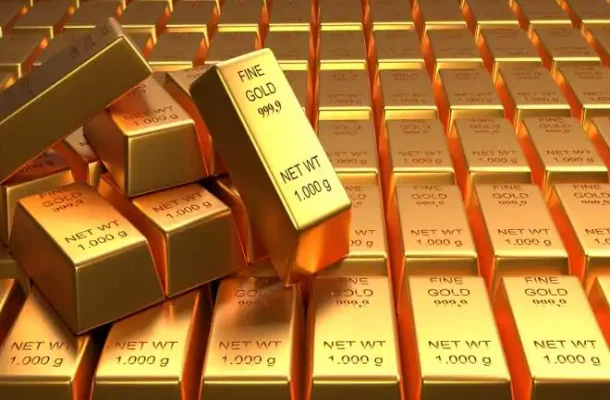
A newly released International Monetary Fund (IMF) report highlights Ghana’s economic vulnerability to fluctuations in global gold prices, emphasizing that the country’s macroeconomic stability is closely tied to the performance of its largest export and main source of foreign exchange.
The IMF’s Risk Assessment Matrix notes that external shocks and domestic vulnerabilities intersect, potentially affecting the economy significantly. According to the report, a hypothetical 30 percent drop in gold prices by the end of 2026, reducing prices to around US$2,820 per ounce, could sharply reduce gold export revenues, weaken foreign exchange inflows, and strain the cedi and international reserves. The Fund estimated that under this scenario, foreign exchange reserve coverage in 2026 could fall by 1.1 months of imports relative to baseline projections, while the Bank of Ghana’s balance sheet could be affected due to its large holdings in gold assets.
The IMF further warned that rising geopolitical tensions, trade disruptions, and heightened commodity price volatility could trigger sharp swings in gold prices, reignite inflation, and undermine investor confidence. Financial market volatility in major economies may also exacerbate the domestic effects of Ghana’s recent debt restructuring, potentially affecting banks’ lending capacity.
Domestic risks were also highlighted. Delays in debt restructuring negotiations could further deplete reserves, weaken the cedi, and accelerate inflation. Additionally, fiscal slippages under the US$3 billion Extended Credit Facility (ECF) programme could widen budget deficits, threaten debt sustainability, and place further pressure on the exchange rate. Rising social discontent due to the high cost of living was cited as a medium-term risk that could slow the implementation of critical reforms.
To mitigate these risks, the IMF recommended that the Bank of Ghana strengthen foreign exchange reserves, allow greater exchange rate flexibility, and ensure orderly market conditions. The Fund also advised hedging reserve assets against market fluctuations, including gold price volatility.
Finally, the IMF urged Ghana to accelerate structural reforms to boost domestic production, diversify the economy, and improve the business environment, reducing dependence on imports and enhancing resilience to external shocks.
Comments