
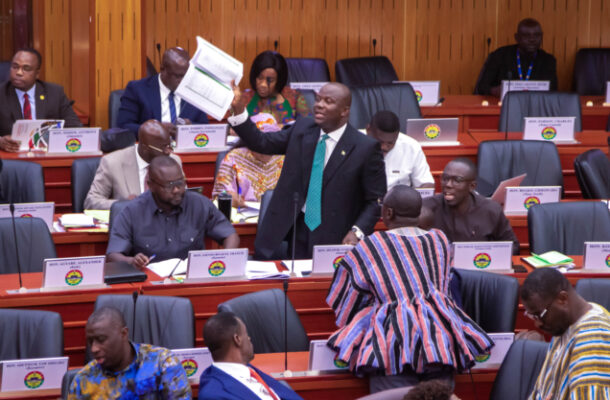
Damongo MP Samuel Abu Jinapor has taken a firm swipe at the government for earmarking GH¢13.1 billion to purchase four helicopters and two presidential jets, questioning why such expenditure is being prioritised when many public sector workers are allegedly struggling to receive their salaries.
Contributing to the debate on the 2026 Budget, Mr. Jinapor argued that the Mahama administration has abandoned its core commitments of reducing living costs and creating jobs, choosing instead to pursue high-cost acquisitions that, in his view, do little to address the pressing needs of ordinary Ghanaians.
He stressed that the decision is “difficult to justify” at a time when nurses, teachers, farmers, and traders are battling financial hardship.
“Is this the priority of the government when traders are suffering, farmers are suffering, nurses are suffering, teachers are suffering?” he asked.
According to him, the move sends a troubling signal at a time when households are under economic strain and key sectors lack resources.
He also rejected claims that the government’s 24-hour economy has been fully rolled out, pointing out that even existing employees in some sectors are not being paid consistently.
“How can they employ additional staff when the current workforce is already owed?” he questioned.
Although the Budget points to an improved inflation outlook and restrained expenditure, Mr. Jinapor said these improvements are not translating into real relief for citizens.
He criticised the government for underspending by 15% in the first nine months of the year, arguing that this has slowed business activity, restricted access to credit, and contributed to widespread payment delays.
“What is described in the Budget as discipline is actually suffocating the real economy. Businesses are struggling, consumers have reduced spending, and the youth are desperate for jobs,” he noted.
Citing reports of over one million metric tonnes of paddy rice rotting in storage because buyers cannot be found, he said the situation reflects distress in the productive sector and weak demand.
He also expressed concern over what he described as a growing government structure, referencing newly created envoy roles and the appointment of 18 deputy heads of mission—more than under any previous administration.
With the Bank of Ghana warning of rising compensation costs, he questioned why the public wage bill continues to grow while many workers remain unpaid.
He highlighted the jump in compensation for the Office of the President from GH¢326 million in 2024 to GH¢540 million in 2025.
Mr. Jinapor concluded that although the budget may look positive on paper, it fails to respond to the urgent economic realities facing citizens.
He urged the Finance Minister and the Bank of Ghana to inject liquidity into the economy, support local production, and restore confidence—priorities he said should matter more than investing billions in aircraft.
Comments