
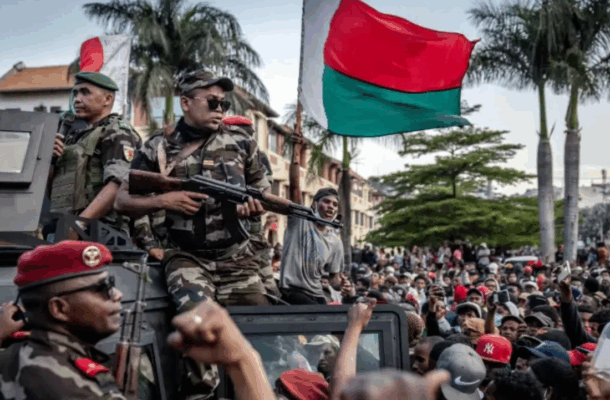
Soldiers from Madagascar’s elite CAPSAT unit joined mass demonstrations against President Andry Rajoelina’s government on Saturday, declaring that they had seized control of the nation’s armed forces and appointed a new military leader.
The troops said their intervention was “in response to the people’s call,” marking the most serious threat yet to Rajoelina’s authority after weeks of escalating protests.
Colonel Michael Randrianirina, a commander of the CAPSAT unit, announced that General Demosthene Pikulas had been named the new head of the military.
Standing beside him, Pikulas avoided commenting on whether Rajoelina had been asked to step down, but the soldiers appeared to have assumed significant control.
Saturday’s rallies drew tens of thousands of demonstrators—one of the largest turnouts since protests erupted on September 25. The crowds called for the resignation of the president and his ministers.
Randrianirina said his forces clashed with security personnel attempting to break up the protests, leading to the death of one soldier.
Speaking to supporters from atop an armored vehicle, Randrianirina declared that Rajoelina, his new prime minister, and the leadership of the gendarmerie “must leave power.” When asked if this was a coup, he replied, “I don’t know yet.”
What began as anger over power and water shortages has transformed into a nationwide movement against corruption, poverty, and economic hardship.
The youth-driven “Gen Z Madagascar” movement is at the forefront of the uprising. According to the United Nations, at least 22 people have been killed and dozens injured since the unrest began, though the government disputes those numbers.
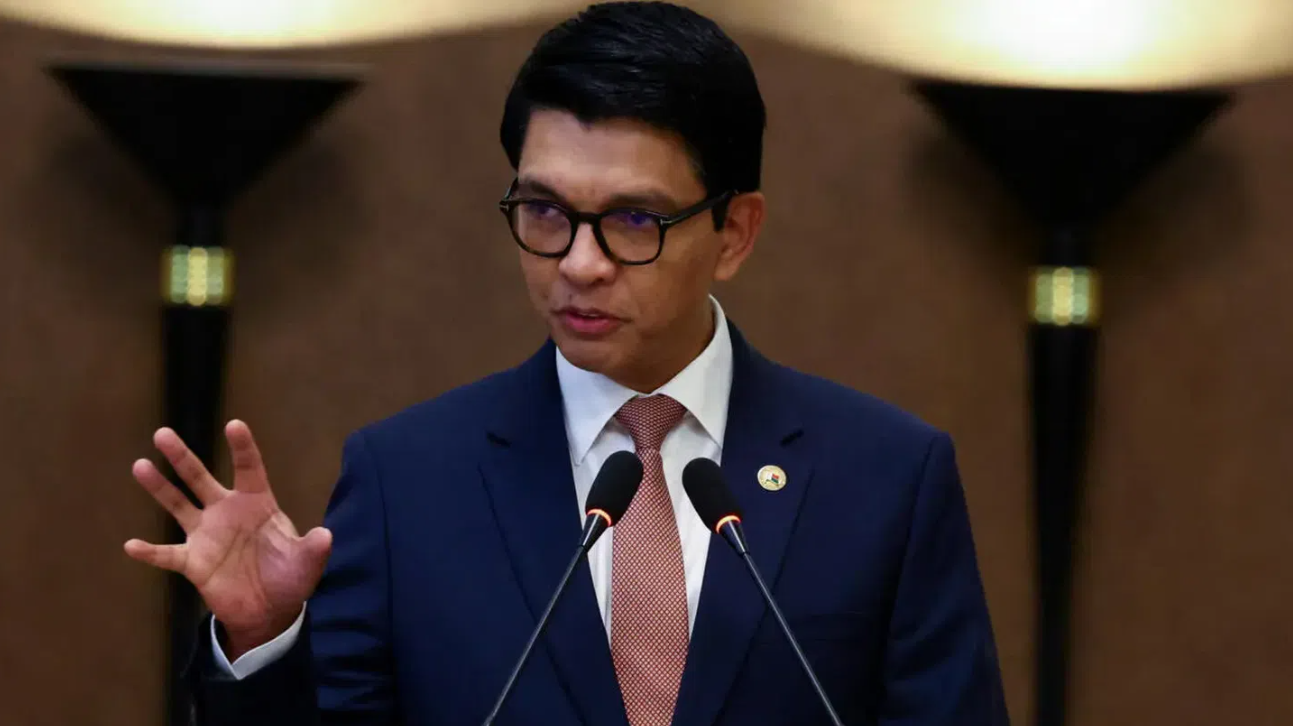
On Sunday, President Rajoelina described the soldiers’ actions as an “attempted coup.” His office issued a statement condemning “an illegal and violent attempt to seize power” and urged national unity in defending constitutional order. Troops were seen stationed around key areas in the capital, Antananarivo, though no immediate violence was reported.
The CAPSAT unit is notorious in Madagascar’s political history—it was the same division that helped bring Rajoelina to power during the 2009 coup. Now, its involvement once again threatens to reshape the nation’s political landscape.
Rajoelina, 51, who was first elected president in 2018 and reelected in 2023 in a disputed vote boycotted by the opposition, has struggled to contain public anger. His dismissal of the government on September 29 did little to ease tensions.
The unrest has united trade unions, civic groups, and young activists, prompting curfews in Antananarivo and other major cities. The United Nations has criticized the government’s early “violent response,” while the African Union has appealed for calm and dialogue.
As events unfolded, the U.S. Embassy in Madagascar urged its citizens to remain indoors, calling the situation “highly volatile and unpredictable.”
The Gen Z Madagascar movement, largely organized through social media, says it draws inspiration from youth-led protests in Nepal and Sri Lanka—part of a broader generational fight for reform in one of Africa’s poorest nations.
Madagascar, an island nation off Africa’s east coast with a population of 31 million, has a long history of political instability. Since gaining independence from France in 1960, it has endured multiple coups and periods of deep political division.
Comments