
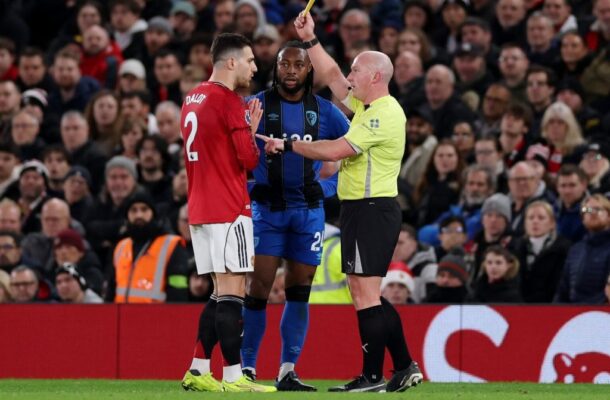
During Bournemouth’s 4–4 draw at Old Trafford, Antoine Semenyo received a yellow card after raising his hand toward Diogo Dalot following a foul. The gesture drew loud reactions and prompted comparisons to past red-card incidents for hand-to-throat contact.
Clattenburg’s rationale
- Nature of contact:
Brief touch, not a grasp. Clattenburg emphasized there was no sustained hold or squeezing motion that would indicate malice. - Key criteria for upgrade:
Intent and force. Officials assess whether the action shows aggression (e.g., a throat grab) and significant force—thresholds not met here. - Verdict:
Yellow card appropriate. A caution recognizes the risk and unsporting behavior without overreaching to violent conduct.
How this fits law and precedent
- Violent conduct vs. unsporting behavior:
Raising a hand can be misconduct, but violent conduct typically requires forceful, aggressive contact (especially to the neck/face) that endangers an opponent. - Consistency principle:
Similar acts have drawn reds when there’s a clear grasp, choke motion, or aggressive push to the throat/face. Semenyo’s action fell below that threshold.
Implications
- For players:
Minimal contact still invites sanction; emotional reactions must be controlled, especially in flashpoints. - For debate:
The nuance—touch vs. grasp; force vs. gesture—explains divergent outcomes across seemingly similar incidents.
Comments