
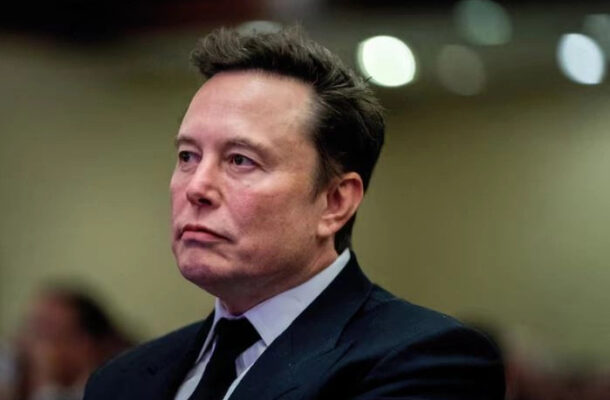
Musk seeks over $130 billion in damages from OpenAI and Microsoft, claiming the firms profited massively from his early role in founding OpenAI. The legal battle is now set to unfold in court.
A High-Stakes Legal Showdown in Silicon Valley
Elon Musk has escalated his legal dispute with OpenAI and Microsoft, seeking more than $130 billion in damages in what could become one of the most consequential technology lawsuits in recent history. The Tesla and SpaceX chief executive argues that both companies benefited enormously from his early involvement in the creation of OpenAI, without fairly compensating him for his financial backing, influence, and strategic input.
The case, filed in a federal court, comes ahead of formal legal proceedings and sets the stage for a complex courtroom battle involving artificial intelligence, corporate governance, and the true value of early-stage contributions to a now-powerful technology company.
Musk seeks over $130 billion in damages from OpenAI and Microsoft
According to court documents cited by Reuters, Musk is asking for damages of up to $134 billion, claiming that OpenAI and its key partner Microsoft unjustly profited from his role in the organisation’s formative years. The filings estimate that OpenAI gained between $65.5 billion and $109.4 billion as a result of Musk’s early contributions, while Microsoft is alleged to have benefited by between $13.3 billion and $25.1 billion.
Musk co-founded OpenAI in 2015, when it was still a small research-focused start-up with an ambitious goal of developing artificial intelligence for the benefit of humanity. At the time, the company had no commercial products and relied heavily on external funding and reputational backing to establish itself in the competitive AI landscape.
The Claim: Funding, Reputation, and Strategic Guidance
Musk’s legal team argues that his role went far beyond that of a passive investor. In court filings, his lead lawyer, Steven Molo, stated that OpenAI would not exist in its current form without Musk’s involvement.
“Without Elon Musk, OpenAI would not exist,” Mr Molo said. “He provided most of the initial funding, put his reputation at the disposal of the founders, and taught the founders everything he knew about scaling a business.”
The lawsuit claims that the value of these contributions has been assessed by an independent financial expert, forming the basis for the substantial damages being sought. Musk’s lawyers argue that both OpenAI and Microsoft were unjustly enriched by this early support as the company transitioned into a commercially powerful force in artificial intelligence.
Responses from OpenAI and Microsoft
OpenAI has dismissed Musk’s claim, describing the demand for damages as “not serious”. The company has consistently argued that it has acted within the law and in line with its evolving mission, despite criticism over its shift towards commercial partnerships.
Microsoft, a major investor and strategic partner in OpenAI, has declined to comment directly on the sums being sought. However, a lawyer representing Microsoft has previously stated that there is no evidence the company aided or abetted any legal wrongdoing by OpenAI.
During the same week Musk’s filing became public, both OpenAI and Microsoft submitted counterclaims. These challenge not only the scale of the damages being requested, but also the legal basis on which Musk is making his demands.
What the Case Could Mean for the AI Industry
As Musk seeks over $130 billion in damages from OpenAI and Microsoft, legal experts say the case could have far-reaching implications for how early contributions to technology start-ups are valued. It may also raise broader questions about the governance of artificial intelligence firms and the responsibilities owed to founders as companies grow and change direction.
With billions of dollars and the future of AI partnerships at stake, the courtroom battle is expected to draw intense scrutiny from the tech world — and far beyond.
Comments