
Nigeria and Ghana have renewed their commitment to deepen customs cooperation in a bid to reshape trade and security operations across West Africa.
The Nigeria Customs Service (NCS) and the Customs Division of the Ghana Revenue Authority (GRA) have pledged stronger collaboration to combat illicit trade, safeguard national revenues, and support the objectives of the African Continental Free Trade Area (AfCFTA).
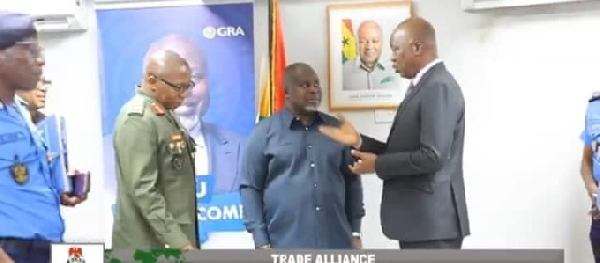
The renewed partnership follows a high-level working visit to Accra by the Comptroller-General of the Nigeria Customs Service, Bashir Adewale Adeniyi, on November 3, 2025. During a meeting with Brigadier-General Glover Annan, Commissioner-General of Ghana’s Customs Division, both leaders emphasised the need to enhance operational coordination in the face of increasingly sophisticated smuggling networks.
Adeniyi noted that Africa’s customs systems must overcome years of fragmentation, citing weak intelligence-sharing, inconsistent enforcement, and limited harmonisation as key challenges exploited by criminals. Ghanaian officials welcomed the partnership, praising recent reforms within the NCS in automation, accountability, and modern enforcement tools. Brig-Gen Annan indicated Ghana’s readiness to align with and learn from Nigeria’s improvements, signalling a new era of collaboration rather than competition.
Both administrations acknowledged that while a Memorandum of Understanding on customs cooperation has existed since 2001, evolving trade patterns and emerging threats require a revised and more comprehensive framework. They agreed that updating the MoU would ensure it reflects technological advancements, modern border realities, and current enforcement standards—helping streamline cargo movement, reduce duplication, and strengthen efforts to combat cross-border crime.
A key priority in the discussions was enhanced intelligence-sharing. With smuggling networks becoming more organised and transnational, Nigeria and Ghana committed to improving real-time information exchange and coordinated enforcement operations. This is expected to close security gaps along major trade corridors and protect revenues lost to illicit activities.
The meeting also highlighted the importance of regional integration under the AfCFTA. With the AfCFTA Secretariat located in Accra, both countries recognised their shared responsibility to ensure customs systems across West Africa support the continent’s free trade ambitions. Stronger cooperation between the two nations is expected to reduce trade barriers, simplify clearance procedures, and facilitate smoother movement of goods—boosting intra-African trade and strengthening regional competitiveness.
The renewed partnership aligns with broader continental initiatives such as the Customs–Partnership for African Cooperation in Trade (C-PACT), an Afreximbank- and WCO-supported programme aimed at advancing transparency, modernisation, and enforcement collaboration among African customs agencies.
Officials anticipate that the Nigeria–Ghana alliance will serve as a model for other African states working to balance trade facilitation with border security. As illicit trade continues to evolve, the strengthened cooperation marks a decisive step toward securing borders, protecting national revenues, and improving trade efficiency. With both administrations committed to harmonisation and intelligence-driven operations, traders can expect faster, more predictable, and more secure cross-border processes—laying the groundwork for a more integrated and resilient regional trade environment.
Comments