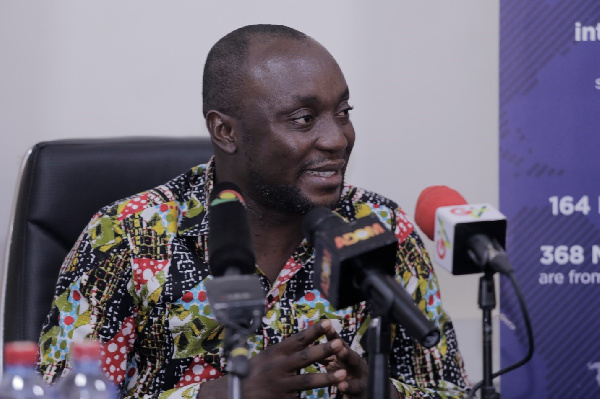
The Member of Parliament for Abuakwa South, Kingsley Agyemang, has called for immediate and far-reaching reforms to Ghana’s healthcare system, warning that avoidable deaths caused by systemic failures are steadily eroding public confidence.
Speaking on Adom FM’s Dwaso Nsem, the MP, who serves on Parliament’s Health Committee, said the time had come for decisive action to address persistent gaps in emergency healthcare delivery.
“It is long overdue for us to confront these challenges directly,” he said. “If we do not strengthen our health system to effectively handle emergencies, public trust will continue to decline.”
His comments follow the death of 29-year-old Charles Amissah, who reportedly died after being turned away from multiple health facilities due to the unavailability of beds. He was allegedly denied admission at Korle Bu Teaching Hospital, Ridge Hospital, and the Police Hospital.
Although paramedics from the National Ambulance Service managed to stabilise him, Dr. Agyemang noted that after nearly three hours of being transferred between facilities, the young man eventually passed away.
According to the MP, the widely cited “no-bed syndrome” is not always the result of infrastructure shortages but often reflects lapses in professional attitude and emergency response.
“In critical situations, health workers are duty-bound to find ways to stabilise patients,” he said. “Denying care in emergencies is not just a systemic issue — it is a matter of conscience.”
As part of the solution, Dr. Agyemang proposed the introduction of a digital “bed dashboard,” a real-time software platform linking secondary and tertiary health facilities. Such a system, he explained, would enable hospitals to instantly identify where beds are available and redirect patients without delay.
“We can learn from systems that work elsewhere,” he added. “Technology should help us save lives, not simply highlight shortages.”
He concluded by stressing that genuine reform must combine improved attitudes among healthcare workers with smart use of technology, insisting that no Ghanaian should lose their life because timely medical care was denied.
“Why should anyone be refused treatment, especially in an emergency like a road accident?” he asked, underscoring the moral obligation at the heart of healthcare delivery.
Comments