
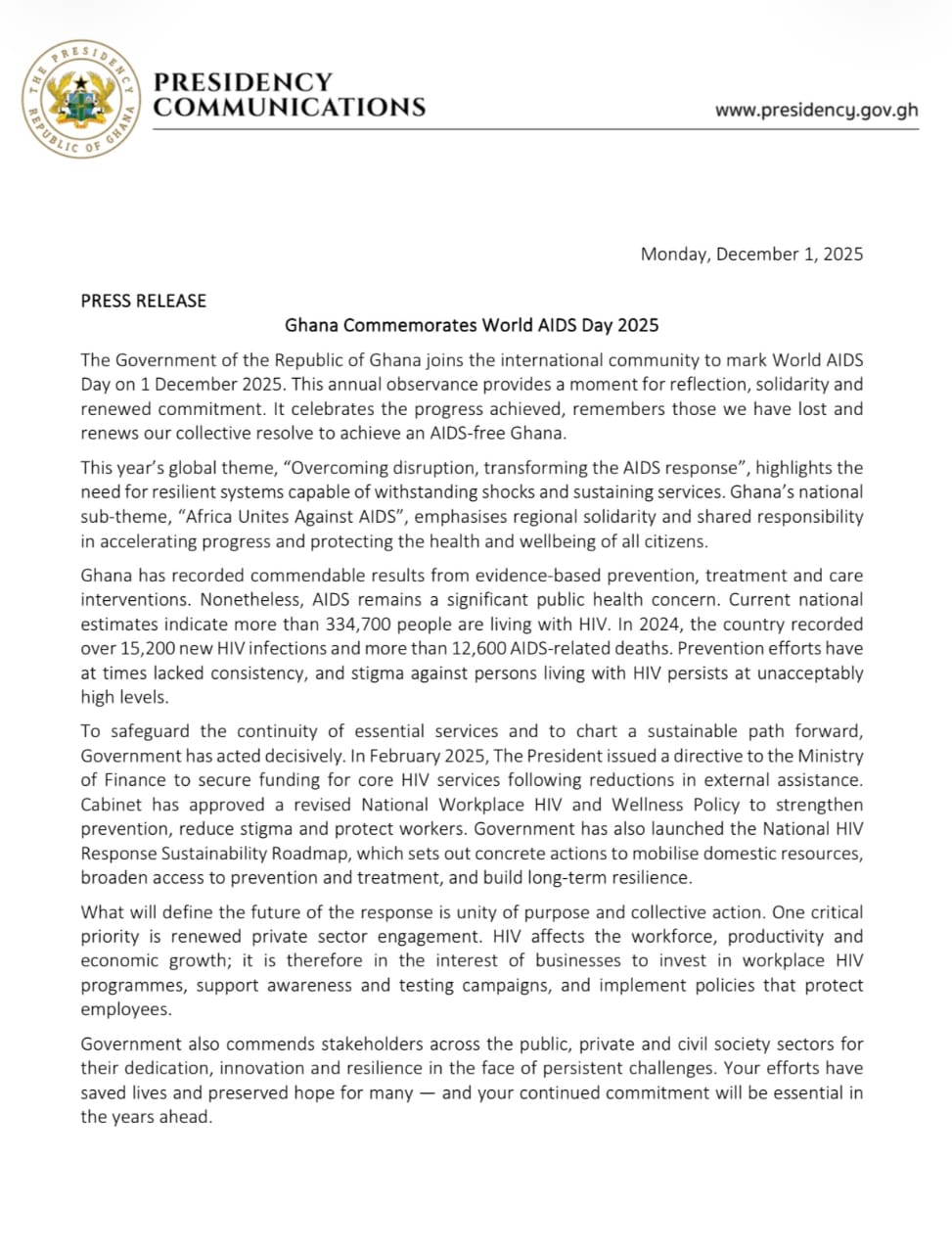
Ghana has renewed its national commitment to the fight against HIV following the release of new data indicating that more than 334,700 people are currently living with the virus across the country.
The updated figures were made public by the Government of Ghana in a statement issued to mark World AIDS Day 2025, observed globally on December 1. The data paints a sobering picture of the current state of the epidemic, despite years of progress in treatment and prevention.
According to the statement, over 15,200 new HIV infections were recorded in 2024, alongside more than 12,600 deaths linked to AIDS-related illnesses. While life-saving interventions have significantly reduced fatalities over time, the government admitted that inconsistent prevention efforts and persistent stigma continue to slow down progress.
Government Moves to Secure Sustainable HIV Funding
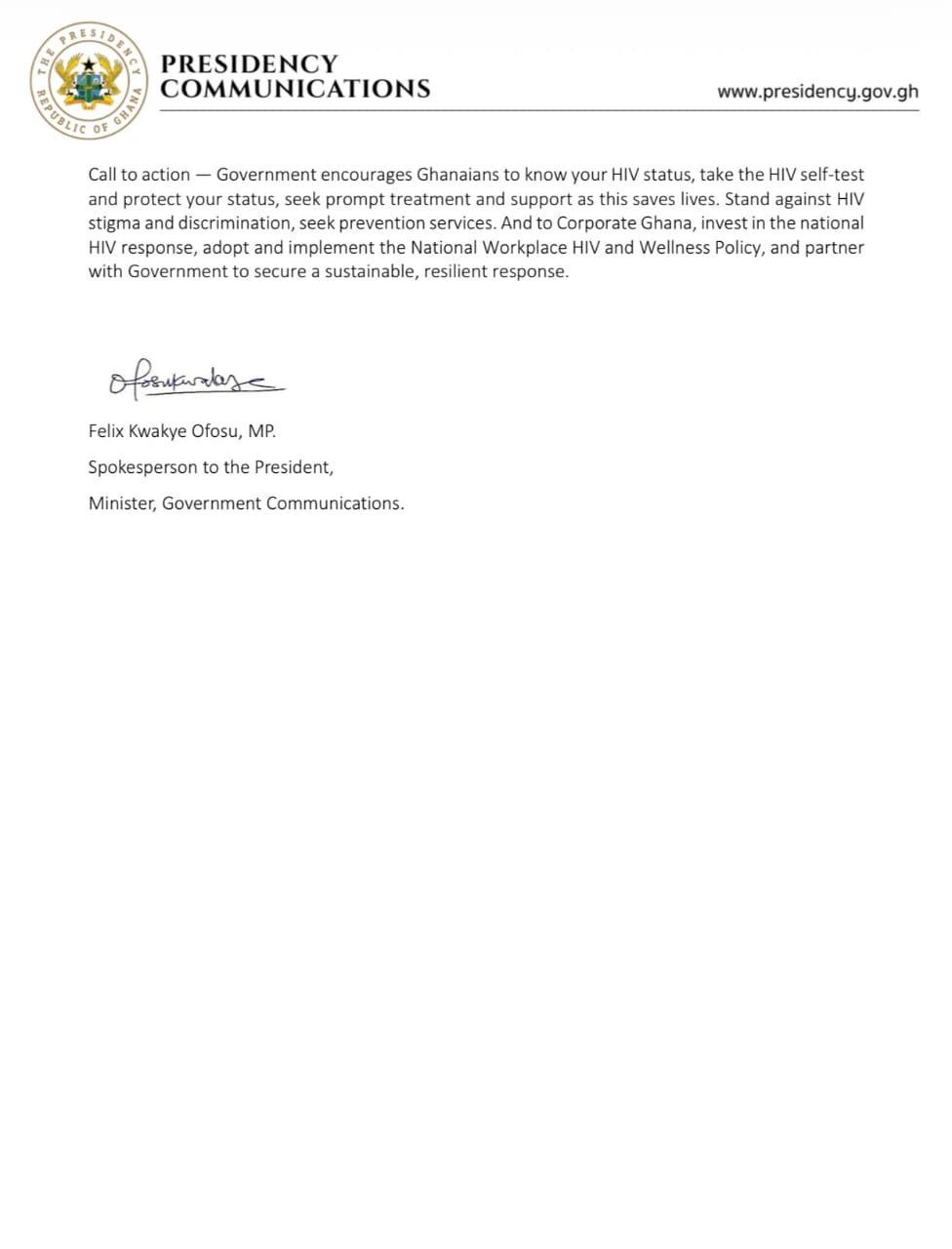
Government spokesperson Felix Kwakye Ofosu disclosed that decisive measures have been taken to safeguard essential HIV services following a decline in foreign funding support.
In February 2025, the President instructed the Ministry of Finance to mobilise funds to sustain critical HIV programmes. In addition, Cabinet has approved a revised National Workplace HIV and Wellness Policy, aimed at combating discrimination and improving protections for workers affected by HIV.
A new National HIV Response Sustainability Roadmap has also been introduced to strengthen local financing, improve access to prevention tools, and widen treatment coverage.
World AIDS Day: A Call to Unity and Action
Describing World AIDS Day 2025 as a period of “reflection, solidarity and renewed commitment,” the government acknowledged both the strides made and the significant work still ahead.
Ghana’s commemoration aligns with the global theme, “Overcoming disruption, transforming the AIDS response,” and the African sub-theme, “Africa Unites Against AIDS,” highlighting the importance of cooperation, resilience and shared responsibility across the continent.
Private Sector Urged to Play a Stronger Role
The government is also calling on businesses and corporate institutions to take a more active role in the national HIV response. With HIV having a direct impact on workforce productivity and economic development, companies are being encouraged to:
- Invest in workplace HIV programmes
- Support voluntary testing and awareness campaigns
- Adopt policies that protect employees’ health and human rights
Tribute to Frontline Workers and Partners
The statement paid tribute to healthcare workers, civil society organisations and private sector partners whose dedication has helped to sustain progress in the face of funding challenges and social barriers.
Government stressed that their continued leadership and commitment will be critical as Ghana pushes forward toward its long-term goal of an AIDS-free future.
Comments