
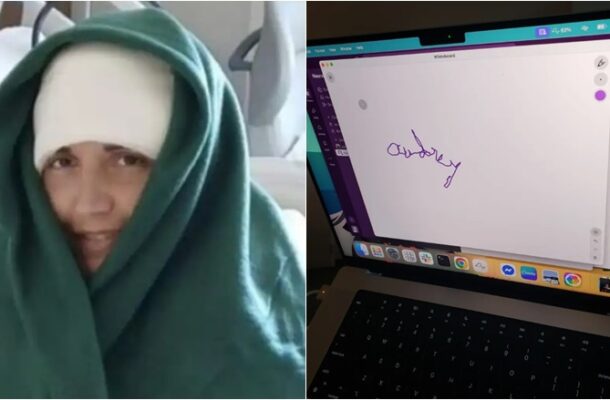
A paralyzed woman writes her name for the first time in two decades using Elon Musk’s Neuralink brain chip, marking a groundbreaking milestone in brain-computer interface technology.
Neuralink Breakthrough: Paralyzed Woman Writes Name Using Only Her Mind
Audrey Crews becomes first woman to test Elon Musk’s brain chip technology, regaining digital control through thoughtIn a groundbreaking achievement for neuroscience and technology, a paralyzed woman has written her name for the first time in 20 years—using only her thoughts. The feat was made possible by a brain-computer interface developed by Neuralink, the neurotechnology company founded by Elon Musk.
Audrey Crews, who lost her mobility at the age of 16, is now among the select few participating in Neuralink’s pioneering human trials. She became the first woman to receive the brain implant, which allows her to control a computer cursor using neural signals alone.
Audrey Crews Shares Emotional First Milestone with Neuralink
“I tried to write my name for the first time in 20 years,” she says in emotional postThe milestone was shared publicly on the social platform X (formerly Twitter), where Crews posted a photo of her computer screen displaying her name—“Audrey”—typed in a slightly shaky but clear digital script.
"I tried to write my name for the first time in 20 years. I'm working on it. Lol #Neuralink," she wrote, sparking an outpouring of support and amazement from users around the world.
Elon Musk himself responded, stating: “She’s controlling her computer just by thinking. Most people don’t realize it’s possible.” His comment underscored the potential of Neuralink’s brain chip to revolutionize how humans interact with machines.
Neuralink Brain Chip Bridges Thought and Technology
Brain-computer interface allows cursor control through neural activityThe Neuralink implant—also referred to as a brain-computer interface (BCI)—functions by decoding electrical activity in the brain and transmitting it to a connected device. In Crews’ case, this allows her to operate a laptop, including moving a cursor and forming words, using nothing but mental intent.
Describing the sensation, Crews explained that it feels “like writing your name in your head,” offering insight into the surreal but intuitive nature of the technology.
Seven Paralyzed Patients in Trial Phase of Neuralink
Company still in early stages but hopes to help tetraplegics walk againCrews is one of seven paralyzed individuals currently participating in Neuralink’s testing phase. While the technology is still far from enabling full-body mobility restoration, Musk remains optimistic about its long-term potential. He has previously suggested that brain chips like Neuralink’s could one day enable people with spinal cord injuries to walk again.
Despite the ambitious goal, current efforts are focused on restoring digital independence to patients—giving them the ability to communicate, browse, and interact with the digital world through thought.
Neuralink Marks Turning Point in Assistive Technology
From mind to screen—Neuralink redefines communication for the paralyzedAudrey Crews’ story is a powerful glimpse into a future where brain-computer interfaces might restore autonomy to millions of people living with paralysis. As Neuralink continues its human trials, her success not only symbolizes a personal triumph, but also a pivotal moment in the evolving relationship between the human brain and machine.
With each neural signal translated into action, Neuralink is inching closer to redefining what’s possible in the world of assistive technology.
Comments