
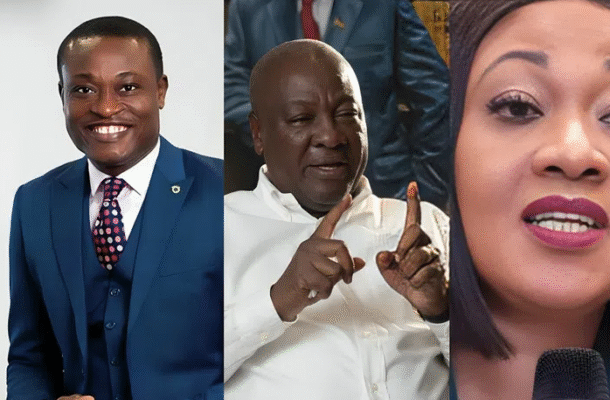
President John Dramani Mahama has received a total of ten petitions seeking the removal of heads and deputies of two key public institutions appointed under Article 70 of the 1992 Constitution.
The petitions involve the Electoral Commission (EC) and the Office of the Special Prosecutor (OSP). Seven of the petitions target the Chairperson of the EC, Jean Mensa, and her two deputies — Dr Bossman Eric Asare, in charge of Corporate Services, and Samuel Tettey, responsible for Operations. The remaining three petitions are for the removal of the Special Prosecutor, Kissi Agyebeng.
Checks by Graphic Online indicate that the petitions have been forwarded to the Chief Justice, Justice Paul Baffoe-Bonnie, in line with constitutional procedure.
Article 70(2) of the Constitution mandates the President, acting on the advice of the Council of State, to appoint the Chairperson, Deputy Chairpersons and other members of the Electoral Commission.
Under Ghana’s constitutional arrangement, the Chairperson of the EC enjoys conditions of service equivalent to a Justice of the Court of Appeal, while the two deputies hold conditions comparable to those of a High Court Judge. Consequently, their removal process follows the same strict constitutional procedures applicable to superior court judges.
Removal of EC Chairperson and Deputies
Article 146 of the 1992 Constitution stipulates that a Justice of a Superior Court or a Chairman of a Regional Tribunal may only be removed for stated misbehaviour, incompetence, or inability to perform official duties due to infirmity of body or mind.
Where the President receives a petition for the removal of such an officer, the petition must be referred to the Chief Justice to determine whether a prima facie case has been established. If so, the Chief Justice is required to constitute a five-member committee made up of three Justices of the Superior Courts or Regional Tribunal Chairpersons appointed by the Judicial Council, and two additional persons who are not members of the Council of State, Parliament, or the legal profession.
The committee is mandated to investigate the complaint and submit its recommendations to the Chief Justice, who then forwards them to the President. All proceedings are held in camera, and the affected official is entitled to defend themselves personally or through legal representation.
The Constitution further directs that the President “shall, in each case, act in accordance with the recommendations of the committee.”
Removal of the Special Prosecutor
The removal process for the Special Prosecutor is governed by Section 15 of the Office of the Special Prosecutor Act, 2017 (Act 959). Like the EC officials, the SP can only be removed for stated misbehaviour, incompetence, incapacity, wilful violation of the oaths of office or secrecy, or conduct that brings the office into disrepute or threatens the security or economic interests of the state.
A petition for the removal of the Special Prosecutor must be submitted to the President, who is required to forward it to the Chief Justice within seven days. The Chief Justice then has 30 days to determine whether a prima facie case exists.
If such a case is established, the Chief Justice is mandated within 14 days to set up a committee similar to that used in the removal of constitutional office holders. The committee has 90 days to investigate and present its findings and recommendations to the President through the Chief Justice.
As with the EC process, the President is constitutionally bound to act strictly in accordance with the committee’s recommendations.
Comments