
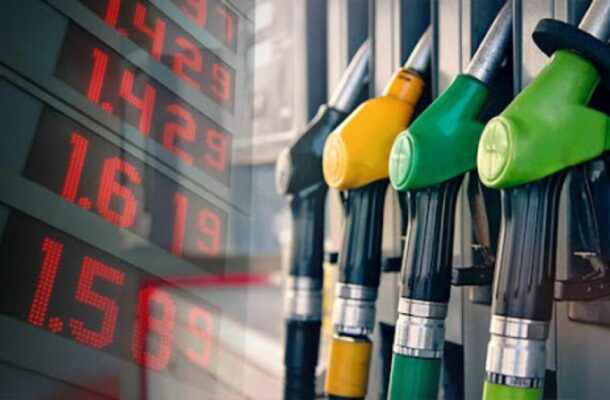
Pressure is mounting on government to abolish the Bulk Oil Storage and Transportation (Bulk Oil Storage and Transportation Company) margin from the petroleum price build-up, as authorities consider suspending selected taxes and levies to ease fuel costs in the next pricing window beginning April 16.
The calls come against the backdrop of rising fuel prices, driven by escalating tensions in the Middle East, which continue to push up global crude oil prices and, in turn, domestic pump prices.
Among the latest voices calling for the removal of the levy is the West Africa Regional Director of CUTS International, Appiah Adomako Kusi, who shared his views in an interview with Citi Business News.
He argued that taxpayers have long financed BOST through the margin, yet the institution has not delivered commensurate value in infrastructure development within the downstream petroleum sector.
“Taxpayers are financing BOST and I think that BOST has to sit up. If they cannot do their role as a strategic stock or building infrastructure for the downstream sector, I think that we may have to take away the BOST margin forever because we pay this BOST margin for many years and we don’t see what the BOST is doing,” he said.
He further suggested that the company should have invested in critical infrastructure such as pipelines linking Accra and Kumasi to reduce transportation costs and improve fuel distribution efficiency.
“By now, BOST should have been able to lay pipes from Accra to Kumasi so that as soon as the fuel gets to Tema, they are able to pump it to Kumasi or other parts of the country,” he added.
Another policy think tank, the Centre for Environmental Management and Sustainable Energy (CEMSE), has also called for the immediate removal of BOST margins from the price build-up, arguing that the company now operates largely as a commercial entity with sufficient internal revenue streams.
CEMSE Executive Director Benjamin Nsiah alleged that the margin has become more of an administrative funding source rather than being used for infrastructure expansion and maintenance.
“BOST margin now becomes an operational income… to increase their wages and engage in frivolous expenditure because of the free money that consumers give them,” he said.
The debate comes after reports that Cabinet has directed the Ministers of Finance and Energy to temporarily suspend selected taxes and margins for an initial four-week period to help reduce fuel price pressures on households and businesses.
However, the Institute for Energy Security (Institute for Energy Security) has cautioned against scrapping the BOST margin entirely, warning that it could weaken fuel supply security and stall critical infrastructure development in the downstream petroleum sector.
Comments