
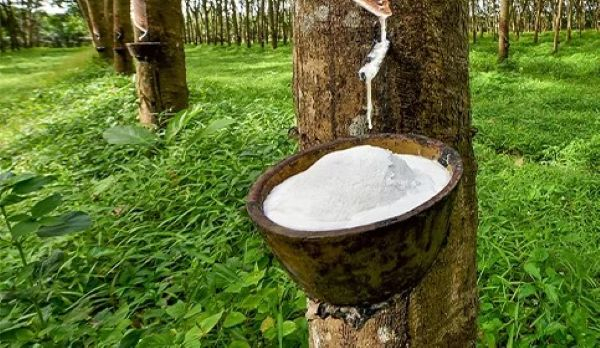
The Rubber Farmers Association of Ghana (RUFAG) has dismissed calls for a total ban on the export of raw rubber, describing such claims as false, misleading and harmful to farmers’ livelihoods.
The association was responding to recent assertions by Ghana Rubber Estates Limited (GREL), a private company, and the Rubber Processors Association of Ghana (RUPAG), which alleged that unchecked exports of raw rubber are undermining local processing capacity, threatening Ghana’s industrialisation agenda and causing annual losses estimated at up to US$100 million.
At a press conference held in Accra on December 22, 2025, RUFAG leadership rejected the claims, insisting they do not reflect the realities of Ghana’s rubber industry.
An executive member of RUFAG, Michael Nyarku, told the Business & Financial Times that the push by some stakeholders for a ban on raw rubber exports is not driven by national interest but by attempts to monopolise the market, suppress competition and compel farmers to sell rubber cup lumps at artificially low prices.
RUFAG further challenged the narrative that processors are the primary drivers of employment in the sector, describing it as misleading. The association noted that while fewer than 1,000 people are employed by rubber processing companies, more than two million dependents rely on incomes generated from rubber farming and related activities.
According to RUFAG, the broader rubber value chain includes over 300,000 rubber tappers, 200,000 carriers and loaders, and about 150,000 tricycle operators engaged in transporting rubber across the country.
Mr. Nyarku warned that policies that promote monopoly pricing and depress farm-gate prices would not protect jobs but instead destroy livelihoods, deepen rural poverty and threaten social stability in rubber-growing communities.
“RUFAG firmly believes that competition, not protectionism, is what will drive efficiency, fair pricing and sustainable growth in the rubber industry. Ghana’s industrialisation agenda must be inclusive and farmer-centred, not driven by narrow corporate interests,” he said.
The association also rejected claims that exports of raw rubber are “unchecked,” explaining that the Tree Crop Development Authority (TCDA) requires all exporters of unprocessed rubber, cashew and shea to be registered and licensed, with permits issued before any shipment.
RUFAG added that the TCDA maintains a permanent presence at the ports, working with the Ghana Revenue Authority and port authorities to ensure compliance, making allegations of unregulated exports unfounded.
The association further pointed out that the export market played a critical role in sustaining farmers’ livelihoods during the COVID-19 pandemic, when some local processors suspended purchases of rubber. Exporters, RUFAG said, provided an alternative market that prevented widespread farm abandonment and economic collapse among rubber farmers.
According to the association, maintaining multiple market options is essential to protecting farmers’ incomes, preventing hardship and reducing youth unemployment, which it noted is a contributing factor to the rise in illegal mining activities.
Comments