
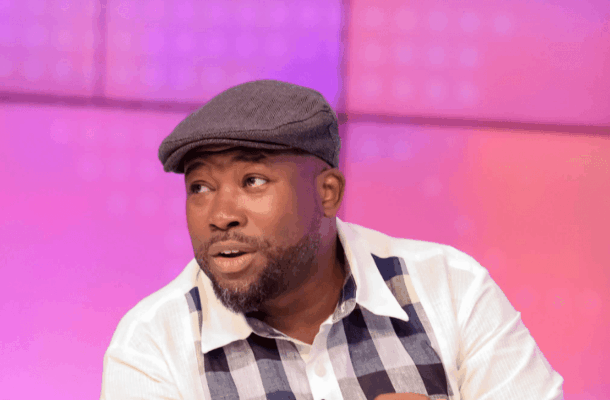
Economic policy analyst and entrepreneur Senyo Hosi has applauded the Mahama administration for restoring fiscal discipline and stabilising the macroeconomy since assuming office in January, but says the country is still far from achieving true economic transformation.
Speaking at the 2025 Deloitte Economic Dialogue on the 2026 Budget, Hosi described the budget as “great” and indicative of progress, particularly in revenue performance and spending controls. He noted that Ghana exceeded its 2025 revenue target — mobilising GH¢226 billion against a projected GH¢211 billion — while maintaining disciplined expenditure.
However, he stressed that the 2026 Budget falls short of delivering the structural reforms needed for long-term transformation.
“There’s brilliance in this budget, especially in capital expenditure plans meant to drive growth. But the question is whether that infrastructure will stimulate sustainable growth,” Hosi said.
He praised the government’s overhaul of mineral royalty management and its rejection of the controversial Agyapa deal, arguing that Ghana would have lost billions annually had the deal been implemented. He also described the Gold Board’s traceability policy as one of the most transformative reforms of the past decade.
Despite these achievements, Hosi warned that deep-seated challenges — including inequality, unemployment, and rising food insecurity — continue to hold back inclusive development. Citing IMF and census data, he highlighted youth underemployment at 50%, persistent poverty levels, and food insecurity affecting 15 million Ghanaians, up from 11 million in 2016.
On agriculture, he criticised the sector’s weak productivity, noting that it employs more than 38% of the labour force but contributes just 21% to GDP.
Hosi also played down the government’s “24-hour economy” initiative, insisting that such outcomes emerge organically from sound policy, not declarations.
“You don’t declare a 24-hour economy. You create conditions for it,” he argued.
He urged policymakers and the private sector to prioritise research, industrialisation, and transparency as core drivers of sustainable growth.
“Beyond applause and slogans, we must make Ghana productive again — research-driven, transparent, and fair,” he said.
The event brought together experts, policymakers, and business leaders to analyse the 2026 Budget under the theme “Resetting Growth, Jobs, and Economic Transformation”, within the context of Ghana’s ongoing IMF-supported stabilisation program.
Comments