
The second prosecution witness in the ongoing SkyTrain trial has told the Accra High Court that although there was enthusiasm for the project within the Ghana Infrastructure Investment Fund, it never crossed the crucial threshold of formal approval.
Testifying before the court, former Board Secretary of the Ghana Infrastructure Investment Fund (GIIF), Kofi Boakye, stated that the fund’s Investment Committee discussed the SkyTrain proposal extensively and expressed support for it, but did not recommend it to the Board for approval.
Mr Boakye explained that the Investment Committee was constituted by the Board specifically to review the SkyTrain proposal and advise on whether it should proceed.
However, he stressed that the committee’s discussions never culminated in a formal recommendation.
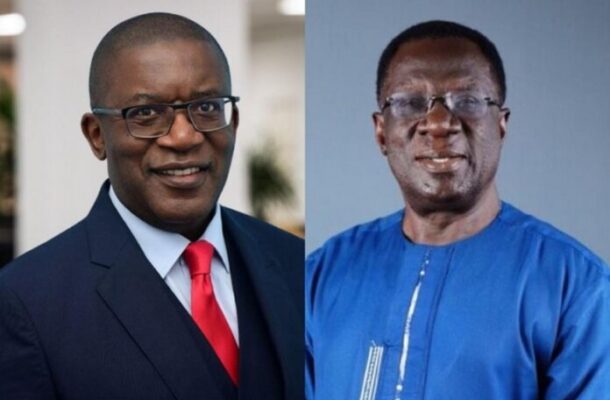
The state has charged former GIIF Chief Executive Officer Solomon Asamoah and former Board Chairman Prof. Christopher Ameyaw-Akumfi with conspiring to cause a financial loss of US$2 million in relation to the SkyTrain project, which was never constructed.
Central to the prosecution’s case is the claim that the project was never approved by the GIIF Board, the body legally mandated to sanction such investments.
The defence has consistently disputed this claim, arguing that the Board did in fact approve the project.
During cross-examination by defence counsel Victoria Barth, an email authored by Mr Asamoah was introduced into evidence.
The email informed Investment Committee members of meetings scheduled for September 28 and October 22, 2018, and attached agendas for those meetings.
One agenda item, listed under “Projects for approval,” included the SkyTrain project development contribution.
Mr Boakye acknowledged the existence of the agenda but stood firm on his position.
“Although several meetings were held and documents were circulated at both the Investment Committee and Board levels, no approval of this project was made by the Investment Committee, no recommendation was made to the Board, and the Board itself did not consider and approve the project as of 2020,” he told the court.
He further clarified that while financial records between July 31 and December 31, 2018, showed funds had been earmarked for the SkyTrain initiative, budgeting for a project did not amount to approval.
“Finding provision in the budget for a SkyTrain project did not automatically mean that the project had been approved,” he said.
According to Mr Boakye, minutes from the Investment Committee meeting held on July 31, 2018, reflected expressions of support for the project but stopped short of authorisation.
“Members expressed support, but that was never an approval by the Investment Committee,” he emphasised.
He added that after the July 31, 2018 meeting, the Investment Committee did not reconvene to consider or approve a recommendation on the SkyTrain project before the Board met on October 24, 2018.
“In conclusion, the SkyTrain project and the Roof Fill project were never approved at either the Investment Committee or Board level throughout the period I served,” he said.
The court has adjourned the case to Thursday, February 19, 2026, for further proceedings.
Comments