
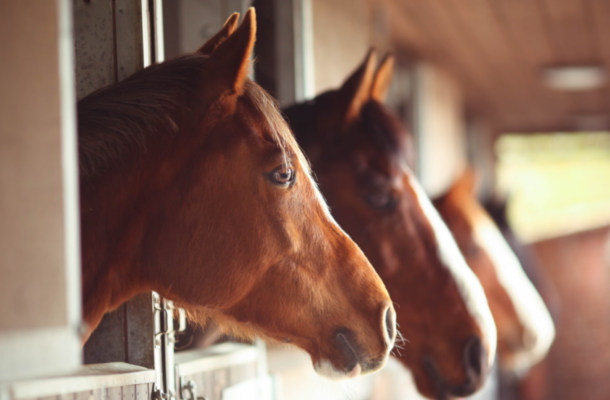
Study: Horses can smell human fear and change their behaviour in response. French researchers say the scent of anxiety makes horses more alert, cautious, and harder to approach.
Fear That Travels Through the Air
Horses may be responding to human emotions in ways far more subtle — and powerful — than previously understood. A new scientific study has found that horses can smell human fear and adjust their behaviour accordingly, becoming more anxious, cautious, and less willing to approach people who are afraid.
The findings, published in the peer-reviewed journal PLOS One, add to a growing body of research suggesting that emotions are not only visible through body language or tone of voice, but can also be transmitted through scent — even between different species.
Study: Horses can smell human fear
The research was carried out by scientists in France, who set out to examine whether horses could detect emotional states through human body odour alone. While animals are known to rely heavily on smell to communicate, the researchers wanted to understand whether emotional signals could also be passed from humans to horses through scent.
To test this, volunteers were asked to watch either frightening or uplifting film clips while wearing cotton pads under their arms to absorb sweat. Some participants viewed scenes from the horror film Sinister, while others watched light-hearted musical moments from films such as Singin’ in the Rain.
The collected samples were then carefully presented to horses, without any visual or verbal contact with the people who produced the scent. This allowed researchers to isolate smell as the only variable influencing the animals’ reactions.
How Horses Responded to the Scent of Fear
The results were clear. Horses exposed to the sweat of frightened people behaved very differently from those that smelled samples from calm or happy individuals.
When presented with fear-related odours, the horses startled more easily, showed signs of heightened alertness, and experienced an increase in heart rate. They were also noticeably more hesitant, approaching their handlers less often and maintaining greater distance.
By contrast, when the horses were exposed to scents linked to positive emotions, they appeared calmer, more relaxed, and more willing to interact with humans.
The findings suggest that fear has a measurable and immediate impact on horse behaviour — even when the person experiencing that fear is not physically present.
Emotional Communication Across Species
Dr Léa Lansade of the University of Tours, one of the study’s authors, said the research highlights how closely connected humans and animals can be.
“Without realising it, we transmit our emotions to animals,” she explained. “This study shows how strong the bond between humans and animals is, and how emotions can pass silently between species.”
Researchers note that while smell is a well-established form of communication among animals, this study demonstrates that emotional cues can also cross species boundaries, reinforcing the idea that animals are highly sensitive to human states of mind.
Why the Findings Matter for Riders and Caretakers
The study’s lead author, Dr Plotine Jardat, believes the findings have practical implications for anyone who works with or cares for horses.
“If you are calm and positive, the horse also reacts better,” she said. “But if you are afraid, the horse senses this and may respond more strongly to stressful situations.”
The researchers suggest that understanding this connection could improve animal welfare, training methods, and safety for riders and handlers alike.
A Growing Field of Research
The study: Horses can smell human fear builds on earlier research showing that dogs and other animals can also detect fear through scent. Together, these findings point to a deeper, largely invisible channel of communication between humans and animals — one shaped not by words, but by emotion itself.
Comments