
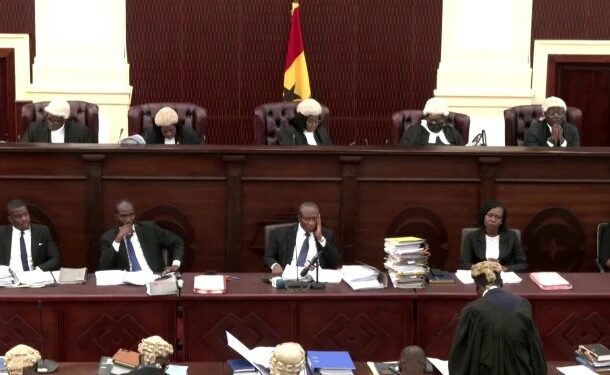
The Supreme Court has fixed January 28, 2026, to rule on a high-stakes appeal that will determine whether the High Court’s decision to overturn the parliamentary election in Kpandai should stand.
The case arose after the Tamale High Court nullified the election of NPP MP Matthew Nyindam and ordered a fresh poll, following a petition by NDC candidate Daniel Nsala Wakpal.
Acting on that judgment, the Electoral Commission (EC) scheduled a rerun for December 31, 2025, but the process was halted when Nyindam took the matter to the Supreme Court.
At the heart of the dispute is a legal question about timelines.
Nyindam’s legal team argues that the High Court had no jurisdiction to hear the case because Wakpal’s petition was filed outside the mandatory 21-day window set by law.
They say the Kpandai results were first gazetted on December 24, 2024, meaning the deadline expired well before the petition was filed on January 25, 2025. On that basis, they contend that the nullification of the election and the order for a rerun were unlawful.
Wakpal’s lawyers strongly disagree. They maintain that the results were re-gazetted on January 6, 2025, and that this later publication reset the 21-day clock.
That, they argue, makes the January 25 petition valid and places the High Court squarely within its powers under Article 99 of the 1992 Constitution.
They also point out that Nyindam himself relied on the January 6 Gazette during the High Court proceedings and cannot now seek to disown it.
The Electoral Commission has acknowledged that gazette notices were issued in batches and confirmed the existence of both the December 24 and January 6 publications—adding another layer of complexity to the case.
Until the Supreme Court rules, the suspension of the Kpandai rerun remains in force. The verdict on January 28 is expected not only to decide who holds the Kpandai seat, but also to set an important precedent on how election petition timelines are interpreted in Ghana.
Comments