
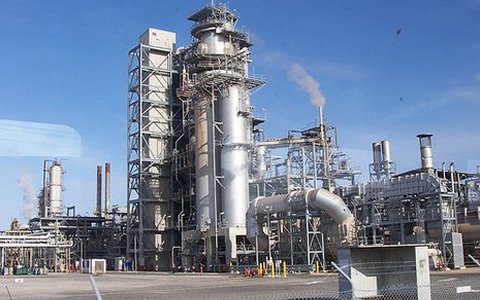
The Managing Director of the Tema Oil Refinery (TOR), Edmond Kombat, has revealed that the refinery is currently saddled with a debt of US$517 million.
According to him, although TOR owed about US$350 million when the previous New Patriotic Party (NPP) government assumed office, the debt has since grown due to the refinery’s failure to service its obligations.
Kombat explained that TOR’s liabilities include debts owed to the Ghana Revenue Authority (GRA), the Staff Provident Fund, SSNIT penalties, the Electricity Company of Ghana, Ghana Water Company, and the Government of Ghana.
He added that crude oil purchased over the years had also accumulated unpaid costs of about US$40 million, while the refinery at times had to borrow just to pay salaries, leaving workers under severe distress.
The MD made these disclosures at an energy sector reporting workshop for journalists in Tema, organised by Energy News Africa in partnership with the Tema Regional Branch of the Ghana Journalists Association (GJA). The workshop focused on “Leveraging Social Media and AI for Accurate and Effective Energy Reporting.”
Kombat, who previously served as Deputy Managing Director during President John Dramani Mahama’s first term, recalled that TOR’s debt profile stood at US$650 million at the time, resulting from trade debts and interest-laden contracts. To address this, President Mahama established the Energy Sector Levy Act (ESLA) in 2015, which included a TOR Debt Recovery Levy.
He noted that ESLA proceeds enabled government to issue a bond, through which about US$300 million was paid to four major banks TOR owed—banks that were at risk of collapse.
According to him, the refinery was gradually restored to operational capacity and successfully processed about seven million barrels of crude, including Ghana’s own TEN crude, proving TOR’s capability to refine local petroleum blends.
Before leaving office, Mahama’s administration had planned to allocate a portion of ESLA receivables to TOR to clear the remaining debts within three years—by 2019. However, Kombat said this vision changed under the new government, which established ESLA PLC and redirected priorities.
He also highlighted the significant attrition of skilled staff, many of whom left for opportunities in the Middle East and the Dangote refinery due to uncertainty about TOR’s future. In addition to financial challenges, workers were demoralised by the lack of promotions. Kombat, who chaired a promotion review committee, said out of 300 petitions received, 250 qualified staff members were promoted to help address the concerns.
Comments