

Eighty years after the first nuclear test, scientists are uncovering how carbon-14 from bomb detonations transformed forensic science, medicine, and even the Earth’s geological history.
The Atomic Marker in Your Body: A Legacy of the Nuclear Age
Nearly eight decades after the first nuclear test in New Mexico, the invisible residue of atomic detonations still lingers — not just in the environment, but inside our very bodies. Known as the “bomb pulse,” this radioactive fingerprint of the atomic age has become a powerful scientific tool, revolutionising everything from forensics to neuroscience.
What began with the Trinity test in 1945 has left a lasting legacy in human biology, offering scientists a precise atomic clock to trace age, history, and even cellular regeneration.
The Bomb Pulse: An Invisible Signature in Human Cells
Following the detonation of hundreds of nuclear bombs in the atmosphere during the 1940s and 1950s, the chemical makeup of Earth’s atmosphere changed dramatically. These explosions nearly doubled global levels of carbon-14 (C-14) — a radioactive isotope absorbed by plants, animals, and humans.
Unlike hazardous radiation, this form of C-14 poses no direct threat to health. Instead, it leaves a measurable marker inside our teeth, bones, and even the lenses of our eyes. The result: an unexpected scientific legacy that continues to unfold.
Dating the Present: C-14's Role in Modern Forensics and Medicine
Before 1963 — when a global treaty banned atmospheric nuclear tests — more than 500 bombs were detonated, primarily by the US and the Soviet Union. Every living organism exposed to air since then carries traces of this carbon bomb.
In forensics, this bomb pulse has become a critical tool. By analysing C-14 levels in tooth enamel, bones, or eye tissues, experts can determine an individual’s year of birth or death with striking accuracy. This method helped solve a 2010 cold case in Italy and was used in 2004 to confirm a Nazi atrocity in Ukraine.
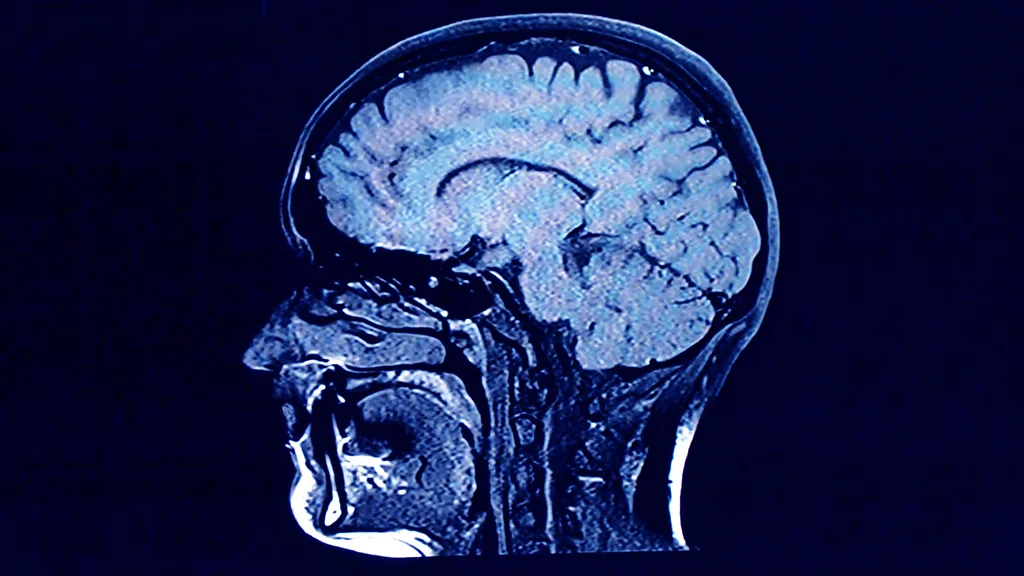
In medical science, the discovery has been equally transformative. In 2005, Swedish biologist Kirsty Spalding used C-14 in DNA to prove that adult human bodies continuously regenerate fat cells. Eight years later, the same technique revealed that new neurons are generated in the hippocampus, overturning long-held beliefs about brain development.
The Pulse of a New Geological Era
Beyond biology and medicine, the bomb pulse is shaping geology. Scientists have proposed using the radioactive signatures left in sediment layers as the defining marker for a new geological epoch — the Anthropocene.
In 2016, the Working Group on the Anthropocene suggested that the spike in C-14, plutonium, and other nuclear elements during the 1950s marks humanity’s irreversible impact on the Earth. Their proposed “golden spike,” or stratigraphic reference point, was Crawford Lake in Ontario, Canada — a site where radioactive particles are preserved in layered sediments.
However, in March 2024, the proposal to formalise the Anthropocene was rejected by the International Commission on Stratigraphy, citing both scientific and procedural concerns.
The Body as a Time Capsule
The Nuclear Age Lives On — Inside UsIf the Anthropocene is ever formally recognised, the generation born in the mid-20th century may be seen as carrying the biological imprint of a nuclear epoch. Future archaeologists may find in our bodies the trace of an age marked by atomic warfare, industrial acceleration, and humanity’s unprecedented influence on the planet.
While C-14 levels are now returning to pre-nuclear norms, those born during the height of atomic testing will forever carry a silent witness within them — the atomic marker that speaks of war, science, and the deep connection between human history and our molecular makeup.
Comments