
The Public Health System could face renewed pressure following the decision by the United States to withdraw from the World Health Organization (WHO), a move that has far-reaching implications for global health governance and countries that depend heavily on multilateral cooperation.
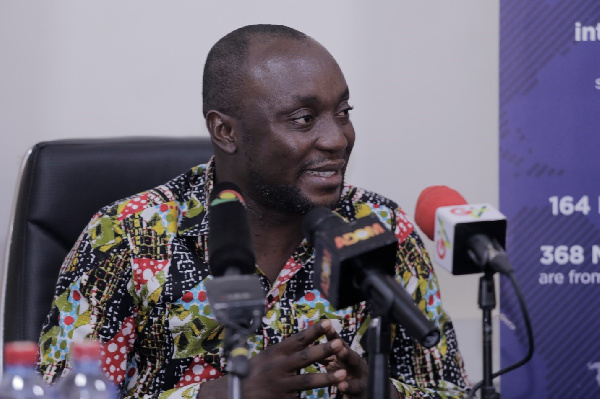
Dr. Kingsley Agyemang, Member of Parliament for Abuakwa South, has warned that the development represents not just a diplomatic shift, but a structural shock to the global health architecture that underpins disease surveillance, emergency response and access to essential health services in low- and middle-income countries such as Ghana.
For decades, the United States has been the WHO’s single largest financial contributor, accounting for an estimated 15 per cent of the organisation’s total budget through a combination of assessed and voluntary contributions.
This funding has supported the WHO’s core functions, including global disease monitoring, coordination of outbreak responses, technical assistance to national health systems and the development of international health standards. With the withdrawal of such a significant funding source, concerns are growing about the organisation’s capacity to sustain these functions at previous levels.
In Ghana, the potential impact is most immediately felt in areas of public health security and essential service delivery.
WHO-backed programmes play a critical role in supporting national efforts in immunisation planning, malaria control, maternal and child health, and broader health systems strengthening.
They also underpin epidemic preparedness and response mechanisms, particularly for climate-sensitive and epidemic-prone diseases such as cholera, meningitis and emerging zoonotic infections.
Reduced WHO financing, Dr. Agyemang cautioned, could weaken technical support for outbreak preparedness and response, at a time when global health threats are becoming more complex and frequent.
Beyond national borders, the US withdrawal raises broader concerns about global coordination.
The WHO’s authority as a convening body enables countries to align donor support, adhere to evidence-based standards and ensure more equitable access to global public goods such as vaccines and essential medicines.
A weakened WHO risks fragmenting leadership in global health, increasing reliance on bilateral or interest-driven partnerships that may not align with the health priorities or its commitment to universal health coverage.
Such fragmentation could also undermine compliance with the International Health Regulations, complicate long-term planning and increase uncertainty in health financing.
Historically, reductions in multilateral health funding have tended to disproportionately affect countries with limited fiscal space, making them more vulnerable to health shocks.
Dr. Kingsley Agyemang noted that without predictable and coordinated global support, Ghana could face higher transaction costs in managing donor relations and sustaining key health programmes, even as demand for services continues to rise.
However, the situation also presents an opportunity for strategic recalibration. Ghana has, in recent years, taken steps to strengthen domestic health financing through the expansion of the National Health Insurance Scheme and the introduction of new funding approaches for non-communicable diseases.
These reforms, while not a complete substitute for multilateral support, provide some buffer against external funding volatility.
Dr. Kingsley Agyemang argued that further resilience could be built through deeper South–South cooperation, stronger engagement with alternative multilateral partners and accelerated investment in local pharmaceutical manufacturing.
Diversifying health partnerships and mobilising domestic resources, he noted, have been shown globally to improve countries’ ability to withstand disruptions in external aid and maintain continuity of care.
While acknowledging progress made by successive governments in advancing national health priorities, Dr. Agyemang stressed that the current moment calls for renewed collective action.
He urged intensified diplomatic engagement to help stabilise global health financing, alongside sustained investment in disease surveillance, emergency preparedness and primary healthcare. Strengthening local research capacity and policy-relevant public health research, he added, would be critical to informing decisions and maximising the benefits of existing reforms.
Comments