
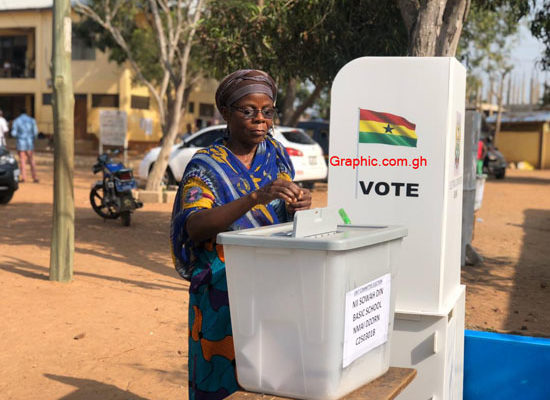
Thousands of delegates of the New Patriotic Party are casting their ballots across Ghana today as the party begins the process of choosing its presidential candidate for the 2028 general elections.
More than 211,000 accredited voters are taking part in the internal contest, which party officials describe as one of the most significant primaries since the party’s defeat in the 2024 polls.
Polling centres have been opened in all 16 regions, including the party’s national headquarters and selected diaspora locations, with voting conducted under strict guidelines and heavy security presence.
The exercise crowns months of intense nationwide campaigns, policy discussions and grassroots engagements by the five aspirants, and is being closely watched as a measure of the party’s unity and organisational strength ahead of the next electoral cycle.
In the race are former Vice President Dr Mahamudu Bawumia; former Food and Agriculture Minister Dr Bryan Acheampong; former Education Minister Dr Yaw Osei Adutwum; former General Secretary Kwabena Agyei Agyepong; and businessman Kennedy Ohene Agyapong.
Party leaders have urged members to maintain discipline and peaceful conduct, warning against vigilante activity, private security involvement or any behaviour capable of undermining the credibility of the process.
The delegate list — totalling 211,849 — is made up of constituency, regional and national executives, party elders and recognised external branches, following revisions to remove deceased members and forfeitures.
Greater Accra and Ashanti remain the strongest voting blocs, with the Eastern, Central and Western regions also expected to play a decisive role in shaping the final outcome.
Balloting is scheduled to end later today, after which votes will be counted at various centres before being transmitted to the national collation hub.
Whoever emerges victorious will carry the responsibility of rebuilding party unity, healing internal rifts and crafting a compelling vision to reclaim power in the 2028 general elections.
Security across all centres is being handled by the Ghana Police Service, while the Electoral Commission is overseeing the process in partnership with party officials and selected observers.
Comments