Following my recent panel discussion on The Digest programme on Kessben TV, alongside Dr. Ernest Daffor of the Parliamentary Training Institute and Dr. Sebastian Paalo of KNUST, I have received considerable feedback—much of it critical—regarding my position on the use of local dialects in Ghana’s national Parliament. I welcome the engagement and, through this piece, seek to further clarify and affirm my conviction.
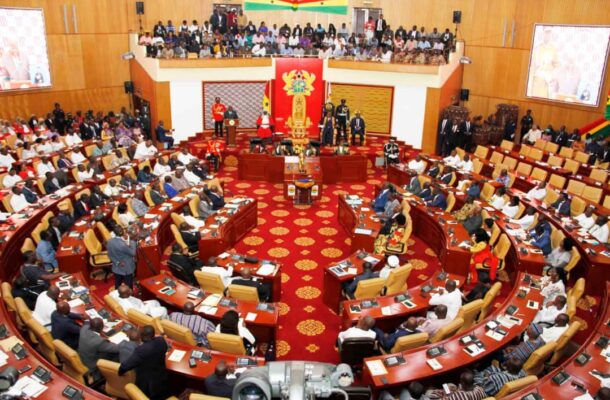
I remain of the firm view that it will be counterproductive for Ghana to invest scarce public resources in resourcing Parliament to provide interpretation services for all local dialects to enable Members of Parliament to speak them on the Floor of the House.
Proponents of this idea argue that allowing local dialects in Parliament would help preserve endangered languages, enhance the transmission of parliamentary proceedings to grassroots communities, and enable MPs who struggle with English to participate more effectively in debates. Some further contend that the English language barrier discourages otherwise capable citizens from aspiring to parliamentary office.
While these arguments are understandable and well-intentioned, I do not believe they sufficiently justify the proposed solution.
There is no dispute that many Ghanaian languages face declining usage due to rapid Anglicisation and modernisation. However, Parliament is not the appropriate institution to resolve this problem. Ghana is said to have no fewer than 46 local dialects that would, at a minimum, require representation in Parliament. Committing resources to interpretation services for all these languages—when language preservation is not the core mandate of Parliament—would be a misapplication of our already limited national resources.
In practice, allowing local dialects on the Floor would be largely cosmetic. Parliamentary debates, laws, and official records would still have to be translated into English for legislative accuracy and archival purposes. This would only prolong proceedings, slow legislative business, and introduce unnecessary inefficiencies into an already demanding process. It begs the question: why deliberately set ourselves back?
As a nation, we already have an official language that promotes social cohesion, facilitates international engagement, and provides commercial and developmental advantages. Rather than burden Parliament with managing local dialects, our efforts should be directed at strengthening the teaching and learning of Ghanaian languages within the educational system—where the real problem lies. That is where sustainable language preservation can be achieved.
If there is a desire to use local dialects in governance as a reflection of cultural heritage, the more appropriate space would be at the Metropolitan, Municipal and District Assembly levels, where governance is closer to the grassroots and linguistic contexts are more homogeneous and practical.
I also respectfully disagree with the assertion that the use of local dialects would suddenly transform non-participating MPs into effective debaters. Parliamentary debate and advocacy are skills that must be deliberately learned and mastered. My years of covering Parliament have shown me that fluency in English alone does not guarantee effective participation—just as the absence of English fluency does not automatically explain inactivity on the Floor.
Effective parliamentary work demands more than representation of diversity; it requires specific competencies. Every profession comes with inherent skill expectations. A banker must be good with numbers, a doctor with biology, and a lawyer with the law. In the same vein, a parliamentarian must possess—or be willing to acquire—the skills of public advocacy, debate, and persuasion.
Parliament thrives when its members are well prepared for the demands of the job. Strengthening capacity, not changing the language of debate, is the more enduring path to effective representation and national development.
By Clement Akoloh – A Parliamentary Affairs and Governance Advocate
Comments