
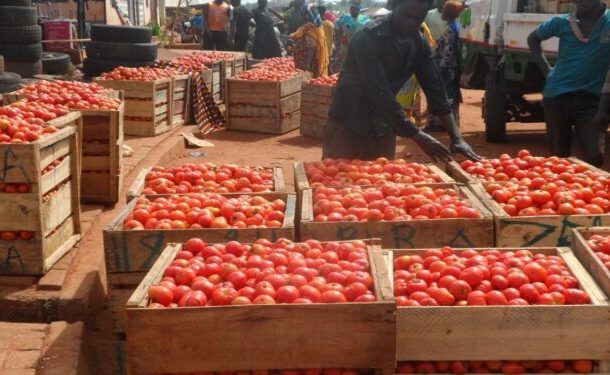
The deadly terrorist attack on Ghanaian tomato traders in Titao, Burkina Faso, is now reshaping not only national security discussions but also the agricultural and food supply policies, as the World Bank leads efforts to cushion the economic fallout with a $20 million intervention.
The February 14, 2026 attack, which claimed the lives of eight Ghanaian traders including Koforidua-based Constance Nyarko aka Yaa Yaa, exposed the deep vulnerabilities in the reliance on cross-border tomato imports. For decades, Burkina Faso has served as a major supplier of tomatoes to Ghanaian markets, supporting thousands of traders and feeding urban demand.
However, escalating jihadist violence in the Sahel—combined with recent trade disruptions including an export ban—has significantly weakened this supply chain.
Against this backdrop, the World Bank, in partnership with the Dutch government, has secured a $20 million grant aimed at stabilizing the tomato sector.
The intervention is designed to reduce dependence on imports by strengthening domestic production capacity, improving storage systems, and building more resilient supply chains.
Speaking at a food security engagement in Accra, Agricultural Economist Dr. Ashwini Sebastian outlined the scope of the initiative, noting that the project is currently in its design phase.
According to her, the World Bank will work closely with local stakeholders, particularly trader associations, to identify key production zones and cluster investments where they will have the greatest impact.
“Our colleagues from the Dutch embassy will assist. We have leveraged a small grant to secure $20 million for tomato interventions in Ghana,” she explained, adding that consultations with traders will guide decisions on infrastructure placement and implementation strategies.
The intervention comes at a time when Ghana is grappling with both humanitarian and economic consequences of the Titao attack.
While families continue to mourn victims such as Constance Nyarko—whose funeral in Koforidua drew national attention led by Chief of Staff Julius Debrah—the country is also confronting the reality of disrupted supply chains that threaten food availability and affordability.
The Ghana National Tomato Traders Association, whose members were directly affected by the attack, has welcomed government and international support but continues to stress the need for long-term solutions.
Traders have repeatedly warned that without improved security and local production capacity, Ghana risks recurrent shortages and rising prices whenever instability affects Burkina Faso.
Comments