
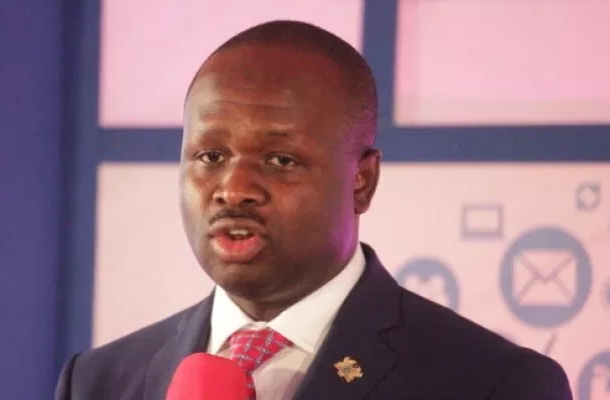
Ghana’s Minister for Defence, Dr Edward Omane Boamah, has sounded the alarm over the link between youth unemployment, poverty, and the growing threat of violent extremism in Ghana and across the Sahel region.
Speaking at the National Forum of the Sahel Peace Initiative (SPI) in Accra, Dr Boamah emphasized that long-standing conflicts such as the one in Bawku cannot be resolved through top-down approaches alone.
“Negotiations in the boardrooms do not always bring peace. We need to listen to the people on the ground,” he said, urging greater involvement of local communities in peacebuilding efforts.
The forum, held under the theme “The Political Economy of Conflict in Ghana: Addressing Youth Unemployment as a Catalyst for Security and Social Cohesion”, brought together religious leaders, policymakers, and civil society organisations.
Dr Boamah, who had just returned from an emergency National Security Council meeting on renewed violence in Bawku, said President John Dramani Mahama is committed to resolving the decades-old tensions in the Upper East Region.
He disclosed that a multi-agency team, including the National Security Coordinator, Minister for the Interior, Chief of the Defence Staff, and the Inspector General of Police, has been tasked with coordinated efforts to restore peace in Bawku.
Highlighting the root causes of instability, Dr Boamah said economic exclusion and rising joblessness among young people were major drivers of violence and extremist recruitment.
“Whether it is unemployment that begets instability or instability that worsens unemployment, either way you are not wrong,” he noted.
He cautioned that without equitable development and inclusive opportunities, some communities could remain vulnerable to extremist ideologies.
Dr Boamah praised the Sahel Peace Initiative for involving faith-based leaders in its work, emphasizing the potential of interfaith dialogue to foster unity.
“Faith can be a powerful unifying force,” he said. “'Blessed are the peacemakers’ must go beyond words.”
As part of the government’s response, he announced that the Ghana Armed Forces would recruit 12,000 young men and women over the next three and a half years. He assured that this nationwide recruitment would ensure balanced regional representation.
“This is how we make sure no Ghanaian youth feels left out of national development,” Dr Boamah said.
The minister also highlighted the importance of supporting women and girls in conflict-affected regions, stressing their role in healing and rebuilding communities.
He concluded by calling on all stakeholders to champion fair policies, build local resilience, and take concrete steps toward sustainable peace.
“Together, we can make a difference,” he affirmed.
Comments