
Oppong Nkrumah leads youth unemployment campaign
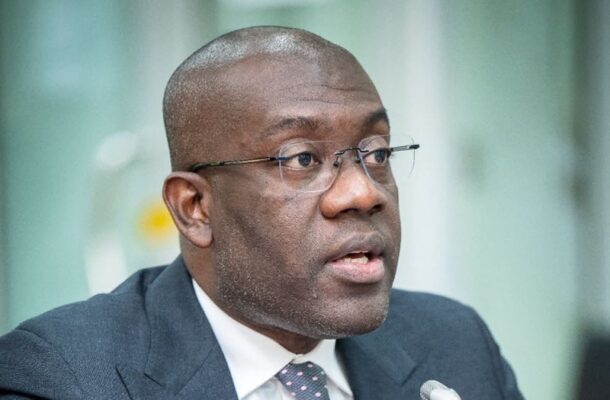
The Ranking Member on Parliament’s Economy and Development Committee and Member of Parliament for Ofoase-Ayirebi, Kojo Oppong Nkrumah, has called for a major rethink of the employment strategy, warning that youth unemployment continues to worsen despite government interventions and public promises of economic recovery.
Speaking on the floor of Parliament on Thursday, 11 June 2026, during discussions on the state of the economy and employment, the former Information Minister described youth unemployment as one of Ghana’s most pressing socio-economic challenges, stressing that policymakers must move beyond rhetoric and adopt practical, measurable solutions capable of creating sustainable jobs for the country’s growing youthful population.
His intervention comes amid growing concerns over the disconnect between improving macroeconomic indicators and the lived realities of many young Ghanaians.
While government officials have pointed to declining inflation, exchange rate stability and broader economic recovery under the International Monetary Fund-supported programme, critics argue that the benefits of those gains are yet to translate into meaningful employment opportunities.
Citing recent data from the Ghana Statistical Service (GSS), Oppong Nkrumah said the unemployment situation among young people remains alarming.
According to the figures, youth unemployment among persons aged between 15 and 24 years increased from 32 percent in December 2024 to 32.5 percent by the third quarter of 2025.
He further noted that nearly two million young Ghanaians are currently classified as being neither in education, employment nor training, commonly referred to as the NEET population.
The Ofoase-Ayirebi legislator also highlighted the situation in the Greater Accra Region, where youth unemployment has reached particularly worrying levels.
According to him, almost half of all young people in the region are unemployed, a development he described as a serious threat to social and economic stability if left unaddressed.
While acknowledging that successive governments have struggled with the unemployment challenge over the years, Oppong Nkrumah argued that the scale of the current crisis requires a more innovative and results-driven approach.
He maintained that young people are no longer interested in political slogans or assurances that jobs will be created in the future, but rather want tangible opportunities that provide dignified and sustainable livelihoods.
“Ghanaian youth do not want slogans. They want feasible programmes that create dignified, productive and well-paid jobs,” he told Parliament.
As part of his proposed solution, Oppong Nkrumah outlined a five-point strategy designed to improve accountability, strengthen programme effectiveness and create pathways into long-term employment.
The first recommendation focuses on accountability and measurement. He called on government to publish delivery scorecards for every major job creation initiative, allowing the public to assess their performance based on measurable indicators.
According to him, programmes should be evaluated against clear benchmarks such as the number of beneficiaries reached, the cost of creating each job, employment retention rates and the speed with which beneficiaries secure work opportunities.
“Every job programme should be anchored to a published delivery scorecard with clear metrics on beneficiaries, cost per job created, time-to-placement and employment retention,” he proposed.
His second recommendation centred on separating skills training from actual job creation.
While acknowledging the importance of vocational and technical training programmes, Oppong Nkrumah argued that training alone cannot solve unemployment if graduates have no opportunities to enter the labour market.
He therefore called for greater alignment between skills development initiatives and real employment opportunities.
The third pillar of his proposal advocates stronger private sector participation in employment generation. He argued that government alone cannot create jobs at the scale required to absorb the growing youth population.
Instead, he proposed that government should focus on reducing investment risks, improving the business environment, co-investing in strategic sectors and creating incentives that encourage private capital to drive large-scale job creation.
Oppong Nkrumah’s fourth recommendation seeks to elevate apprenticeship programmes into a central pillar of the employment strategy.
He called for a nationally coordinated apprenticeship framework that would include certification systems, support for employers and structured pathways that allow apprentices to transition into formal employment or entrepreneurship.
His fifth proposal focuses on data-driven policymaking through the establishment of a comprehensive Labour Market Information System.
According to him, policymakers currently lack sufficient real-time information about vacancies, labour demand and skills shortages across different sectors of the economy. He argued that such a system would help government, employers and educational institutions better align training programmes with labour market needs.
The Minority lawmaker maintained that Ghana cannot afford to delay action on youth unemployment, warning that the country risks undermining its economic gains if young people continue to be excluded from meaningful employment opportunities.
“We do not need more slogans or promises that results are in the pipeline. We need a more effective architecture to solve the worsening youth unemployment problem of our country. Data from the Statistical Service is clear. The youth unemployment problem is getting worse. The time to act is now,” he stressed.















Comments (0)