
The man who once commanded fear but died behind bars
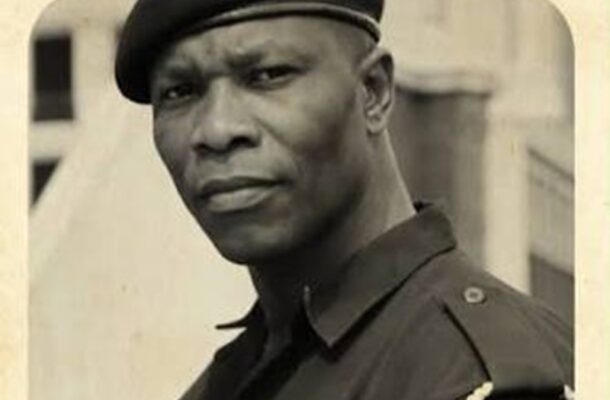
The story of former police officer Alhaji Sheikh Shehu, popularly known as Ex-Regimental Sergeant Major (RSM) Jack Bebli, remains one of the most controversial and dramatic episodes in Ghana’s criminal history.
Once regarded as one of the most powerful and feared figures within sections of the country’s security establishment, Jack Bebli’s life took a dramatic turn from authority and influence to conviction, imprisonment and eventual death behind bars.
For many Ghanaians who lived through the late 1980s and 1990s, the name Jack Bebli evoked both fear and fascination.
His eventual conviction for armed robbery involving one of the country’s largest gold heists shocked the nation and exposed what investigators described as a sophisticated criminal syndicate allegedly operating with the involvement of security personnel.
Bebli served as the Regimental Sergeant Major of the now-defunct Commando, popularly known as the Panther Unit, of the Ghana Police Service.
The Panther Unit was regarded as one of the most feared security formations of its era, tasked with combating violent crime and maintaining law and order during a period when armed robbery had become a major national concern.
As RSM of the elite unit, Bebli wielded considerable influence and authority. His reputation extended beyond the police service, with many residents in parts of Accra viewing him as a powerful figure whose name alone commanded attention.
However, behind the image of a tough security officer, suspicions were gradually growing about alleged links between some security personnel and organized criminal activities.
Those suspicions reached a turning point in 1999 when investigators uncovered what would later become one of the most notorious gold robbery cases.
The case centered on the robbery of a bullion van transporting gold bars valued at approximately GH¢240 million.
According to court records, Bebli and seven alleged accomplices planned and executed a daring operation targeting the vehicle as it transported the precious cargo from the mining areas toward Accra.
Prosecutors told the court that the gang positioned itself at Yamoransa Junction in the Central Region, where members travelled in a Peugeot Estate vehicle and a Nissan Urvan bus as part of preparations for the operation.
The group was reportedly armed with AK-47 assault rifles and dressed in military uniforms to disguise their identities and create the appearance of an official security operation.
Investigators alleged that the gang closely monitored and followed the bullion van as it travelled along the Cape Coast-Accra highway carrying the gold bars.
When the convoy reached Abotsia, near Apam Junction, the armed men allegedly launched their attack.
Court records indicated that the gang blocked the path of the bullion van, assaulted members of the security convoy and opened fire on the vehicle.
The sudden and violent attack forced the occupants of the bullion van to flee for safety, leaving the vehicle and its valuable cargo vulnerable to the robbers.
With the convoy scattered, the gang reportedly seized control of the bullion van and took possession of the gold bars.
Investigators later discovered that the stolen gold had been transferred into other vehicles, including trucks reportedly associated with GHACEM and Ashanti Goldfields Company, before being transported to Accra.
The operation was initially viewed as one of the most sophisticated robberies in Ghana’s history, raising concerns about insider involvement and the apparent knowledge the gang possessed regarding the movement of the gold shipment.
Despite the gang’s elaborate planning, investigators eventually managed to break the case.
The breakthrough reportedly came when one of the suspects, identified as Frimpong, was arrested at the Elubo border while allegedly attempting to flee Ghana into neighbouring Côte d’Ivoire with a portion of the stolen gold.
According to investigators, Frimpong’s arrest provided crucial intelligence that led to the unraveling of the entire operation.
During interrogation, he allegedly identified several members of the robbery syndicate, including Jack Bebli.
The revelations triggered a series of arrests that shocked the nation and brought renewed scrutiny to allegations of criminal infiltration within sections of the security services.
The subsequent trial attracted enormous public interest due to Bebli’s status as a former senior police officer and the scale of the robbery.
For months, the case dominated headlines as prosecutors presented evidence linking the accused persons to the armed robbery.
In July 2001, the legal proceedings culminated in the conviction of Bebli and five of his co-accused.
The court sentenced them to 15 years imprisonment for armed robbery. The verdict marked one of the most significant criminal convictions involving a serving or former member of the security services.
Many observers viewed the case as a powerful statement that no individual, regardless of rank or influence, was above the law.
The conviction also reinforced public concerns about corruption and criminal infiltration within institutions entrusted with enforcing the law.
Following his imprisonment, Bebli largely disappeared from public view as he served his sentence at the Nsawam Medium Security Prison.
Years later, reports emerged that his health had deteriorated while in custody.
In May 2009, it was reported that the former police officer had suffered a heart attack while serving his prison sentence.
Despite efforts to manage his condition, Bebli subsequently died while still in custody, bringing a dramatic end to a life that had traversed both the heights of authority and the depths of criminal conviction.
His death effectively closed one of the most remarkable chapters in the criminal justice history.






Popular News
No trending posts found.