
6,000 applicants tested positive for drug use in security services recruitment
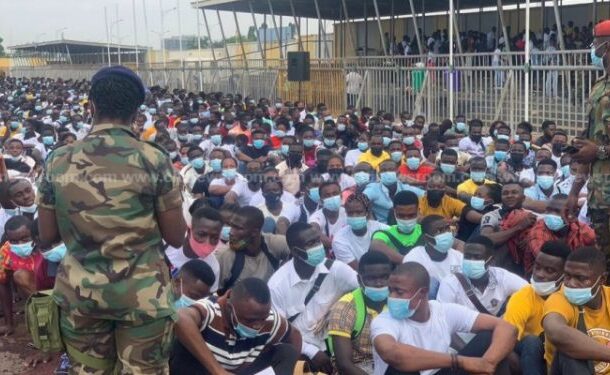
More than 6,000 individuals attempting to secure positions within the nation’s security apparatus have been exposed as illicit drug users after undergoing mandatory screening, a revelation that has triggered urgent calls for preventive action across the country.
The positive test results represent approximately seven per cent of all candidates screened for recruitment into the Ghana Police Service, Ghana Prisons Service, Ghana National Fire Service and the Ghana Ambulance Service — applicants whose bodies showed traces of cannabis, cocaine, methamphetamine, opiates and tramadol when subjected to screening protocols.
Brigadier General Maxwell Obuba Mantey, heading the Narcotics Control Commission, disclosed the findings at Ghana’s commemoration of the International Day Against Drug Abuse and Illicit Trafficking held in Accra on June 26, his words carrying a note of alarm that transcended routine policy commentary.
“If we cannot secure the people who guard our streets, how do we secure the country? This is not a cause for despair. It is a call for urgent, systematic action,” Mantey stated.
The NACOC chief contextualised Ghana’s crisis within a global epidemic. Approximately 316 million individuals worldwide consume illicit drugs annually, generating hundreds of billions of dollars in revenue that feed the coffers of international criminal syndicates.
Those networks have become increasingly sophisticated, manufacturing and trafficking substances through evolving channels, encrypted digital communications and methods of concealment that continue to outpace law enforcement detection capabilities.
Ghana itself has graduated from its former role as a mere transit corridor for narcotics destined for foreign markets.
The nation has become a destination — a consumption hub where synthetic drugs and novel psychoactive compounds proliferate with alarming velocity.
These emerging substances pack greater potency and addictiveness than their predecessors and prove far more difficult to identify through conventional testing methodologies.
Evidence of the scale emerged in operational metrics spanning between 2025 and April 2026. NACOC documented 2,217 arrests, secured 165 prosecutions and seized more than 8.5 tonnes of narcotic material.
Particularly troubling was the confiscation of 45.4 million tramadol tablets — a quantity sufficient to dispense opioid medication to every Ghanaian citizen with dosages to spare.
The government has responded with infrastructure expansion. NACOC’s district operational commands have proliferated from fewer than 10 across the nation to 77 establishments blanket the 16 regions.
Body scanner technology at Accra International Airport is undergoing replacement through a partnership with the Kingdom of the Netherlands, with new systems expected operational by August.
A modern forensic laboratory dedicated to substance analysis is under construction, projected to commence operations by month’s end, enhancing investigative capacity and prosecutorial success rates.
Chief of Staff Julius Debrah delivered the keynote address, urging a calibrated response that marries rigorous law enforcement against trafficking organisations with compassion toward addiction victims.
He argued that while criminal enterprises profiting from human suffering demand uncompromising prosecution, individuals battling substance dependencies warrant support and treatment.
“We must be uncompromising in our response to criminal organisations that traffic illicit drugs, recruit vulnerable young people, and profit from human suffering. But we must also recognise that many of those struggling with addiction are themselves victims,” Debrah stated.
Interior Minister Muntaka Mohammed-Mubarak sounded a similar theme, urging parents, educators, clergy and traditional leaders to amplify governmental efforts through community education.
Speaking directly to student attendees, he implored them to reject substance experimentation and remain anchored to their aspirations.
“Do not allow drugs to diminish your ambition, cloud your judgment or divert you from your purpose. Let your choices reflect the human promise and potential within you,” Mubarak said.
National Chief Imam Sheikh Osman Nuhu Sharabutu directed particular attention toward parents, particularly mothers, whose vigilance and guidance he described as foundational to youth protection.
He called for intensified public messaging that would extend beyond ceremonial halls into the communities where addiction takes deepest root.





Popular News
No trending posts found.