
Supreme Court justifies removal of former CJ Torkornoo
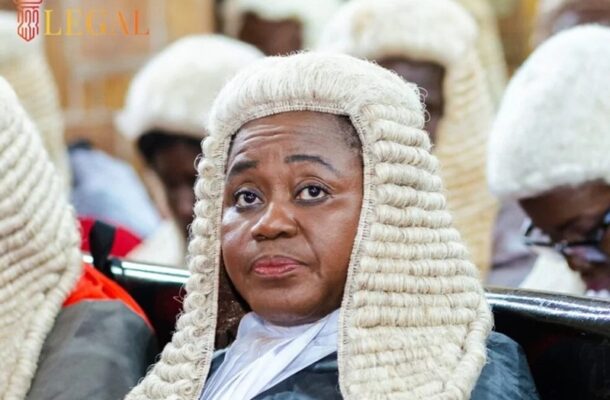
The Supreme Court has provided detailed reasons for upholding the constitutional process that culminated in the suspension and eventual removal of Chief Justice Gertrude Araba Esaaba Sackey Torkornoo, ruling that President John Dramani Mahama acted within the confines of the 1992 Constitution throughout the proceedings.
In a landmark judgment delivered on July 2, 2026, the apex court dismissed two consolidated suits that sought to invalidate the process used to suspend and investigate the former Chief Justice.
The court concluded that neither the President’s decision to determine a prima facie case without first conducting a separate hearing nor the absence of a Constitutional Instrument regulating Article 146 rendered the removal process unconstitutional.
The unanimous decision, authored by Justice I. O. Tanko Amadu and delivered by a seven-member panel comprising Justices Tanko Amadu (Presiding), Yonny Kulendi, Henry Anthony Kwofie, Senyo Dzamefe and Richard Adjei-Frimpong Amaleboba, effectively affirmed every major step taken by the President under Article 146 of the Constitution.
“The consolidated action fails and is accordingly dismissed,” the Supreme Court ruled.
Constitutional Dispute
The legal battle dates back to March 2025 after President John Dramani Mahama received three separate petitions seeking the removal of Chief Justice Gertrude Torkornoo from office on allegations of misconduct and constitutional breaches.
Pursuant to Article 146(6) of the Constitution, the President referred the petitions to the Council of State for consultation to determine whether they disclosed a prima facie case that warranted a formal investigation.
Before the President reached his decision, Justice Torkornoo wrote to the Presidency requesting copies of the petitions and asking to be given an opportunity to respond before any determination was made.
The Secretary to the President subsequently furnished her with all three petitions and granted her ten days to submit a written response. After receiving her responses, they were forwarded together with the petitions to the Council of State for consideration.
Following consultations with the Council of State, President Mahama concluded on April 22, 2025, that the petitions established a prima facie case and proceeded to constitute a five-member committee of inquiry under Article 146.
At the same time, Justice Torkornoo was suspended from office pending the outcome of the committee’s investigations.
That decision triggered a series of legal challenges before Ghana’s courts and later the ECOWAS Court of Justice.
Two Constitutional Challenges Before The Supreme Court
The Supreme Court was invited to determine two fundamental constitutional questions arising from the removal process.
The first suit was filed by Old Tafo Member of Parliament Vincent Ekow Assafuah, represented by former Attorney-General Godfred Yeboah Dame. He argued that the Constitution required the President to formally notify the Chief Justice and hear her representations before consulting the Council of State on whether a prima facie case existed.
The second suit, filed by Theodore Kofi Atta-Quartey and argued by lawyer Alhaji Farouk Seidu, challenged the entire removal mechanism on the basis that Parliament had never enacted a Constitutional Instrument to regulate how Article 146 should be implemented.
According to the plaintiff, without such regulations, neither the President nor the Council of State could lawfully exercise their constitutional powers.
Supreme Court Rejects Fair Hearing Argument
In addressing the first challenge, the Supreme Court acknowledged that every judicial officer facing removal is constitutionally entitled to a fair hearing.
However, the judges held that the Constitution intentionally places that hearing at the committee of inquiry stage under Article 146(8), not during the President’s preliminary assessment of whether allegations disclose a prima facie case.
The court explained that the President’s role at the initial stage is limited to deciding whether the allegations are sufficiently serious to warrant an investigation, rather than determining whether the Chief Justice is guilty.
To illustrate the distinction, the judges compared the process to criminal proceedings where a judge first decides whether there is “a case to answer” before a trial begins. That preliminary assessment, the court said, does not amount to a finding of guilt.
Similarly, the President’s determination of a prima facie case simply allows the constitutional inquiry to proceed.
The substantive hearing, where the affected Chief Justice has the opportunity to challenge evidence, cross-examine witnesses, be represented by lawyers and fully defend herself, occurs before the committee established under Article 146.
According to the court, requiring another hearing before the President at the screening stage would effectively duplicate the constitutional process and blur the distinction carefully established by the framers of the Constitution.
Article 146 Declared Self-Executing
The Supreme Court also dismissed the argument that the removal process required a Constitutional Instrument before it could lawfully operate.
The judges held that Article 146 is “self-executing,” meaning that it contains all the essential constitutional procedures necessary for its implementation without requiring additional legislation.
The court noted that the Constitution clearly identifies the roles of the President, the Council of State and the committee of inquiry, while also providing safeguards such as the right to be heard and the requirement that proceedings be conducted in private.
According to the court, accepting the contrary argument would produce absurd constitutional consequences.
The judges warned that if constitutional powers depended on Parliament first passing implementing regulations, important constitutional functions could become permanently paralysed simply because no regulations had been enacted.
The court observed that under such reasoning, even a Chief Justice found to have committed serious misconduct could never be removed merely because Parliament had failed to pass procedural rules—a result the judges said could never have been intended by the Constitution.
Although the court acknowledged previous judicial concerns that Article 146 lacks detailed procedural guidance, it stressed that addressing those shortcomings is a matter for Parliament or future constitutional reforms rather than judicial interpretation.
All Actions Upheld
Having rejected both constitutional challenges, the Supreme Court concluded that there was no legal basis to invalidate any aspect of the removal process.
The court therefore upheld the President’s determination that a prima facie case existed, the consultation with the Council of State, the establishment of the five-member inquiry committee and Justice Torkornoo’s suspension pending the investigations.
The ruling effectively affirmed that every step undertaken under Article 146 complied with the Constitution.
Significance of the Judgment
The decision represents one of the most significant constitutional pronouncements in the Fourth Republic on the removal of a sitting Chief Justice.
It clarifies the scope of presidential authority under Article 146, defines the stage at which judicial officers are entitled to a constitutional hearing and confirms that the removal provisions of the Constitution can operate without additional legislative regulations.
The judgment is also expected to influence future constitutional disputes involving protected public office holders and further shape Ghana’s jurisprudence on judicial accountability, due process and the separation of powers.






Popular News
No trending posts found.