
Dr. Bawumia mourns late Dagbon chief who healed Kingdom’s ancient wounds
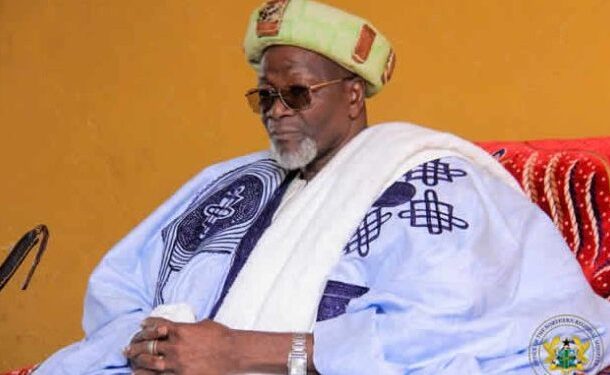
Ghana’s opposition presidential candidate has mourned the departure of a traditional ruler whose abbreviated reign nonetheless accomplished the institutional healing that had eluded Dagbon for decades — a monarch whose wisdom transcended ceremonial function and whose counsel shaped Vice Presidential and electoral trajectories of the nation’s second-highest elected office.
Dr Mahamudu Bawumia issued a statement on Monday, July 13, memorialising Yaa-Naa Abukari Mahama II, whose death marks the conclusion of a stewardship that commenced during Dagbon’s darkest period and progressively restored institutional coherence to a kingdom historically fractured by succession disputes and factional antagonism.
Bawumia characterised the deceased monarch as a transformative leader whose reign, though compressed in duration, exercised outsized institutional impact upon one of Ghana’s most historically significant traditional polities.
The king inherited a kingdom bearing the scars of protracted internal conflict and systematically applied patience and ancestral wisdom toward the restoration of communal unity.
“Ndan Ya-Na Abukari II emerged as the King of Dagbon during one of the most challenging periods in Dagbon history, and with ancestral wisdom and patience, he guided the ancient Kingdom towards peace, unity and prosperity,” Bawumia stated.
The monarch accomplished what predecessors had failed to achieve: the reconciliation of family lineages sundered by succession disputes and the societal reintegration of communities fractured by institutional dysfunction.
His approach blended cultural tradition with contemporary institutional sensibility, positioning Dagbon simultaneously as guardian of ancestral protocols and participant in modern governance frameworks.
Beyond reconciliation, the monarch championed concrete development within his kingdom.
He leveraged his traditional authority and personal relationships to advocate for infrastructural projects and governmental resource allocation directed toward Dagbon’s advancement — demonstrating that traditional leadership remained capable of delivering material improvements to constituent populations.
“His reign was short but greatly impactful. Through his wise leadership, he united families once broken and healed a society greatly fractured before him.
He represented a blend of tradition and modernity perfectly in the way he led Dagbon. He constantly advocated for and lobbied for major developmental projects in Dagbon,” Bawumia reflected.
The relationship between Bawumia and the monarch transcended protocol formalities. During his tenure as Vice President, Bawumia cultivated a mentoring relationship with the Dagbon sovereign, drawing upon the monarch’s accumulated wisdom regarding governance, institutional management and the navigation of political complexity.
That counsel continued following Bawumia’s assumption of the NPP presidential nomination, with the candidate regularly visiting the Gbewaa Palace to pay ceremonial homage and receive guidance from the traditional leader.
“At the personal level, I benefited immensely from his counsel during my time as Vice President of Ghana and later, as the Presidential candidate of the New Patriotic Party.
It was always an honour to pay him homage at the ancient Gbewaa Palace and to draw from his immeasurable wisdom and guidance,” Bawumia disclosed.
The death registers as institutional loss transcending the ceremonial or the personal. Dagbon has been deprived of a unifying figure who had only recently consolidated stability.
Ghana has lost a traditional leader whose influence extended into contemporary politics and whose counsel shaped high-level political discourse. Bawumia has been deprived of a source of wisdom and guidance that had proven invaluable during politically complex circumstances.
“His passing marks a great loss to me, to the Dagbon Kingdom, and to Ghana as a whole. May Allah comfort his immediate family, the Chiefs, and people of Dagbon, and Ghana as a whole.
It is a painful affliction,” Bawumia concluded, his language invoking both Islamic convention appropriate to Dagbon’s religious composition and the gravity of the institutional loss.



Popular News
No trending posts found.