















Nirmal Purja confirmed among 10 killed in Broad Peak avalanche
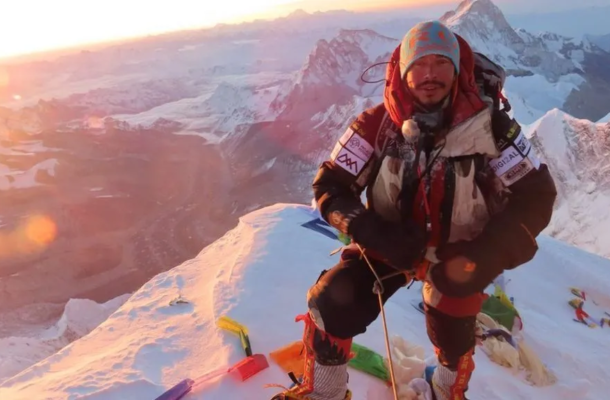
Renowned British-Nepali mountaineer Nirmal Purja has been confirmed dead after an avalanche on Broad Peak in Pakistan killed 10 climbers.
Elite Expeditions, the company involved in the expedition, said with “profound sadness and immense heartbreak” that Purja, 43, died in Thursday’s avalanche. His older brother, Kamal, later paid tribute to him, writing: “We will miss you every single day”.
Purja’s death was also confirmed by Nepal’s Prime Minister Balendra Shah, who said that “the tragic death of six Nepalese and four other foreign climbers, including world record holder Nirmal Purja, in the Karakoram mountain range of Pakistan, has shocked us”.
“The history of their courage, dedication, and contributions will always remain inspiring,” Shah added.
Pakistani officials said earlier that the bodies of three climbers from Purja’s expedition had been recovered. They were American Mallory Geis, Nadhira Ahmed Abdullah Al Harthy from Oman and Pur Bahadur Gurung from Nepal.
In a statement, Kamal Purja wrote: “It is with the heaviest heart that I share the devastating news that my beloved younger brother, Nirmal ‘Nimsdai’ Purja, and the other climbers are no longer with us.
“Although our hearts are broken, we are incredibly proud of you. Your legacy will live forever,” he added.
UK Defence Secretary Wes Streeting said in a post on X: “Incredibly sad to learn of the passing of Nirmal (Nims) Purja and those he was climbing with.
“He was an inspirational man who served in our Armed Forces for many years – and whose incredible mountaineering adventures are known the world over.”
Naila Kiani, a spokesperson for the Alpine Club of Pakistan, which is involved in the rescue operation, told the BBC’s Newshour programme that Purja had led several expeditions in which she had taken part.
Describing him as a “very experienced climber and fearless”, Kiani praised his leadership.
She said the Alpine Club would only formally announce Purja’s death once his body had been recovered, but added: “we are fearing them all dead”.
Kiani also said rescuers had seen some bodies, although they had not yet been able to reach them.
Teams have been searching for the climbers on Broad Peak, the world’s 12th-highest mountain. The summit rises to 8,047m (26,400ft) in Pakistan’s Karakoram range.
Purja was leading the multinational climbing group. He became internationally known in 2019 after reaching the summits of all 14 mountains higher than 8,000m in 189 days, breaking the previous record by more than seven years.
His achievement was documented in the Netflix film 14 Peaks: Nothing Is Impossible, released two years later.
At the time, Purja said: “It has been a gruelling but humbling six months, and I hope to have proven that anything is possible with some determination, self-belief and positivity.”
Born in Nepal, Purja served in the British military for 16 years, including 10 years in the special forces. He was awarded an MBE by the late Queen in 2018 for his achievements in extreme high-altitude mountaineering.
He lived with his wife and three-year-old daughter in Hampshire, southern England, and said he was the first Gurkha to climb Everest while serving in the British military.
In his final post on X, published on Monday, Purja said climbing Broad Peak had not originally been part of his plans. His initial objective had been Gasherbrum II, also known as G2.
“Initially, the plan was to climb just G2,” Purja wrote.
He said that, shortly before leaving for Pakistan, he realised a successful ascent of Broad Peak could leave him with only one more mountain to climb before becoming the “first person in history to climb all 14 eight-thousanders twice. Without oxygen.”
An eight-thousander is a mountain higher than 8,000m above sea level.
“This wasn’t planned,” Purja wrote. “But opportunities don’t scream: they whisper to those already working in silence.”
“Broad Peak, I ask for nothing but safe passage up and back down. I take zero mountains for granted,” he wrote.
Broad Peak is regarded as one of the more difficult mountains to climb. Its first successful ascent came in 1957, when an Austrian expedition reached the summit.
Many climbers have completed the ascent since then, but dozens have died on the mountain. At least six fatalities were recorded in 2013, one of Broad Peak’s deadliest years.





Popular News
No trending posts found.