“A body where no one can speak freely” — Ansa-Asare blasts Council of State as purely partisan
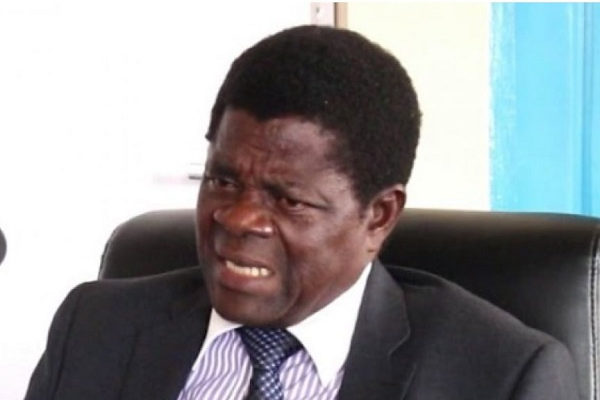
The Council of State — Ghana’s institution of presidential advisors — has come under scathing criticism from a respected legal academic who argues it has become so saturated with partisan politics that independent thinking has been suffocated.
Kwaku Ansa-Asare, a former Director of Legal Education and onetime head of the Ghana School of Law, levelled the charge during an appearance on JoyNews’ Newsfile on Saturday, June 20, as discussion turned to the recent high-profile departures from the advisory body, including former Chief Justice Sophia Akuffo’s resignation.
His verdict was damning: the Council’s political composition has become total and suffocating, leaving members unable to voice opinions without fear of political repercussions.
“If you look at the composition of the Council of State, it’s 100 per cent partisan,” Ansa-Asare said. “So, you will not feel free. You will not have an independent mind.”
He suggested that the inhospitable political atmosphere may have driven respected figures from the body. The departure of former Chief Justice Georgina Wood, in particular, could well have been a response to the Council’s partisan character, he theorised.
“This is a place that you go, where you cannot speak your mind. What is this body that you can’t exercise your freedom of speech, freedom of choice and freedom of expression?” he asked rhetorically.
Ansa-Asare called for fundamental reform, arguing that the Council must become a genuine forum where divergent political and ideological viewpoints coexist peacefully.
“We’ve reached a stage where any person who finds himself or herself on the opposite side will leave. That’s unfortunate and regrettable,” he observed.
On Choosing Akuffo’s Successor
The conversation shifted to the question of who should fill Sophia Akuffo’s vacant seat — a delicate matter given the Council’s fraught political dynamics.
When the possibility of nominating former Chief Justice Gertrude Torkornoo arose, Ansa-Asare rejected it outright, arguing that her removal from office disqualifies her from the title “former Chief Justice” for constitutional purposes.
“Gertrude Torkornoo is not a former Chief Justice. If you have been removed, you are being removed,” he said bluntly. “The person was removed.
The person was not paid anything. The person was asked to pack in. And then, because we need a replacement, all of a sudden, she is a former Chief Justice. No. Constitutionally, that is not right.”
His gaze then turned to former Chief Justice Kwasi Anin-Yeboah, whom he predicted would face insurmountable political obstacles should his name be put forward.
“To be honest with you, the NDC will unanimously vote against Anin Yeboah. I can predict that. I’m a Ghanaian, so I know how these things work,” Ansa-Asare said, alluding to the political realities that constrain the President’s choices.
He explained that appointing someone perceived as allied with the opposition would create unnecessary friction for President John Mahama, forcing him to work alongside someone he cannot trust or comfortably collaborate with.
The legal scholar also recalled the storm of criticism that swirled around Anin-Yeboah during his tenure as Chief Justice — accusations that he favoured the NPP. Could a President in good conscience appoint him again, knowing the political baggage that comes with his name?
“When he was in office, he was criticised as being an NPP Chief Justice. Do you think in good conscience that a President can happily settle on Anin Yeboah? Let’s face facts. It will not happen,” Ansa-Asare reasoned.
Where That Leaves Georgina Wood
That analysis left Georgina Wood as perhaps the only remaining viable option — yet even that path is fraught with complications. If Wood was previously sidelined from the Council for reasons unknown, she may harbour reservations about accepting a fresh invitation to join.
“If I were her ladyship, maybe because I had been bypassed, I would decline any invitation,” Ansa-Asare suggested.
In the end, he conceded, if Wood declines, the President may have little choice but to look back to Anin-Yeboah — accepting the political discomfort that appointment would bring.
The broader takeaway: Ghana’s constitutional advisory body is broken, trapped by partisan divisions that have made it increasingly impossible for anyone perceived as outside the governing coalition to feel welcome or operate independently.




Popular News
No trending posts found.