
Afenyo-Markin blames govt’s GoldBod focus for agric decline
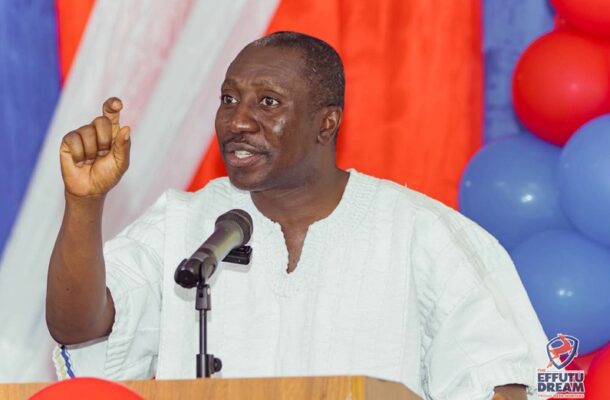
Minority Leader and Member of Parliament for Effutu, Alexander Kwamena Afenyo-Markin, has accused the Mahama administration of neglecting the agricultural sector in favour of what he described as an excessive focus on GoldBod operations, arguing that the country’s food production has suffered as a result.
Addressing members of the Tertiary Students Confederacy (TESCON), the Minority Leader claimed that government policies have made it more expensive to produce staple foods locally than to import them from abroad.
He described the development as a dangerous trend that threatens food security, undermines local farmers, and weakens the country’s agricultural economy.
According to him, the government has concentrated its attention on the GoldBod initiative and its Gold-for-Reserves programme while failing to introduce policies capable of boosting agricultural production, supporting farmers and creating sustainable markets for locally produced food.
Afenyo-Markin argued that the imbalance in policy priorities has left many farmers struggling despite investing significant time and resources into crop production. He maintained that many producers are unable to secure reliable markets for their harvests after enduring the high cost of cultivation.
“So today in Ghana, you may check for yourself, it is cheaper to import rice than to locally produce rice. Our locally produced rice is more expensive. Maize is more expensive; people are importing maize,” he told the gathering.
The Minority Leader further claimed that if government had devoted the same level of attention and financial commitment to agriculture as it has to GoldBod, Ghana would have strengthened its food basket, created savings for the economy and improved the livelihoods of farmers across the country.
He also referred to what he described as disagreements between the Ministry of Food and Agriculture and the Ministry of Finance as evidence of challenges within government regarding agricultural policy and resource allocation.
Afenyo-Markin questioned the government’s broader development priorities, pointing to what he said were setbacks in major national projects initiated under the previous New Patriotic Party administration.
Agenda 111
He cited the Agenda 111 hospital programme, arguing that the current administration has failed to continue implementation of the nationwide healthcare infrastructure project.
According to him, governments should build upon the initiatives of their predecessors rather than abandon them after assuming office.
The Minority Leader further alleged that reports by the International Monetary Fund indicated significant losses associated with GoldBod transactions, contending that those resources could have been better utilised to strengthen agriculture and support local food production.
He maintained that a government with a clear economic strategy would prioritise policies that improve agricultural productivity, reduce food imports and stabilise prices for consumers while creating employment opportunities for rural communities.
His remarks come at a time when agriculture remains a major contributor to Ghana’s economy, employing millions of people and serving as the primary source of livelihood in many rural communities.
However, the sector continues to face persistent challenges, including high input costs, limited access to financing, inadequate storage facilities, post-harvest losses and unstable market access.
Successive governments have introduced programmes aimed at increasing domestic food production and reducing dependence on imports, particularly for commodities such as rice and maize. Despite these interventions, Ghana continues to import substantial quantities of food annually to meet domestic demand.
Afenyo-Markin insisted that unless the government rebalances its economic priorities by giving agriculture the attention it deserves, local farmers will continue to struggle while imported food products become increasingly competitive on the Ghanaian market.
He called on the government to adopt practical policies that support farmers, strengthen domestic food production, and create sustainable markets capable of making agriculture profitable for Ghanaian producers.






Popular News
No trending posts found.