















Ghana Parliament urged to overhaul campaign finance after Supreme Court ruling
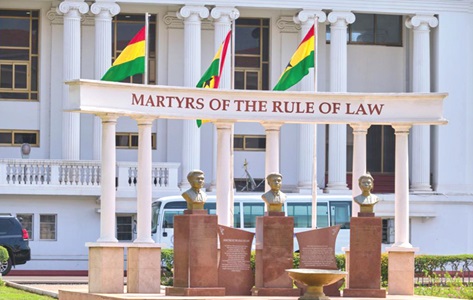
The Supreme Court’s decision to require Ghana’s political parties to open their parliamentary and presidential primaries to all members in good standing has created an opportunity for Parliament to tackle the rising cost of politics and strengthen democratic accountability.
The court ruled that restricting participation to delegates was unconstitutional, giving parties one year to amend their constitutions, rules and electoral procedures. The judgment is regarded as one of the most significant rulings of Ghana’s Fourth Republic because it addresses both internal party democracy and the way political campaigns are financed.
The ruling came shortly before the Government published its position paper on the recommendations of the Prof. Kwasi Prempeh Constitution Review Committee. In that document, the Government endorsed both the Supreme Court’s decision and the committee’s recommendation for wider participation in party primaries.
The decision is based on the 1992 Constitution. Article 55(2) gives every citizen the right to take part in political activity intended to shape government, while Article 55(5) says that “the internal organization of a political party shall conform to democratic principles.”
For many years, Ghana’s delegate-based primary system has been associated with vote buying, bribery, patronage, intimidation and the commercialisation of internal elections. Because a relatively small number of delegates made the final decisions, candidates often focused money and influence on individuals instead of persuading the wider party membership through their policies, competence and ideas.
Moving to broader participation could change that incentive structure. It would place greater emphasis on grassroots organisation, policy discussion, issue-based campaigning and sustained engagement with party members.
The scale of campaign spending makes reform particularly urgent. Research by the Ghana Centre for Democratic Development (CDD-Ghana) found that parliamentary candidates spent an average of more than GH¢4 million in 2020 to secure nominations and contest seats. Presidential primaries and national campaigns can cost more than US$100 million, equivalent to approximately GH¢579 million.
Few candidates can fund such campaigns themselves. As a result, many rely on wealthy financiers whose support may be linked to expectations of future political or commercial rewards.
One financier interviewed for the CDD-Ghana study said: “I finance candidates for president and parliament on the ticket of both the NDC and NPP to ensure I get new contracts and protect the contracts I received from a previous government if there is a change of government. So far, things have been good for me and my business” (p. 45).
Calls for campaign finance legislation
Ghana’s existing political finance rules do not require parliamentary or presidential candidates to disclose campaign donations, identify their financiers or submit returns detailing their expenditure. Political parties provide some financial statements under the Political Parties Act, 2000 (Act 574), but individual candidates are not subject to a meaningful disclosure system.
That lack of transparency can create conflicts of interest, encourage corruption and increase the risk of state capture. Once in office, elected officials may face pressure to reward financiers through inflated contracts, procurement advantages, tax concessions or political appointments. Some may also try to recover money borrowed to fund their campaigns.
The ultimate burden can fall on taxpayers, either through the use of state resources to repay political financiers or through efforts to recover campaign debts.
The Supreme Court’s judgment has therefore been described as more than a ruling on party procedures. It also provides Parliament with an opportunity to establish a comprehensive campaign finance framework under Article 55(17), which gives Parliament the power to regulate political parties by law.
Any new legislation should require candidates to disclose campaign donations, identify significant donors, publish detailed expenditure reports, comply with spending limits and submit audited returns after elections.
It should also set a defined campaign period. The proposal under discussion includes a 60-day period before polling day, although the Constitution Review Committee recommended 120 days. By comparison, Ivory Coast allows 14 days of campaigning, Cabo Verde 11 and Nigeria 90.
A shorter and regulated campaign period could reduce costs, discourage permanent campaigning and improve the prospects of candidates who do not have access to large financial resources. That could benefit women, young people and persons who are differently-abled.
Parliament is also being urged to prohibit the use of state resources for campaign purposes. The restrictions would cover government vehicles, public funds, state personnel, public facilities and official communication platforms.
The argument is that public resources belong to the people of Ghana and should not be used for the benefit of political parties or incumbents.
The law would also need to criminalise vote buying, bribery and undue influence during internal party elections. Extending criminal liability to primaries would support the Supreme Court’s objective of promoting genuine internal democracy and help reduce the monetisation of candidate selection.
Regulation and public support
Some critics say opening primaries to all members would create logistical and financial difficulties for political parties. Others fear that rival parties could attempt to infiltrate their membership and influence the outcome of internal elections.
Those concerns are considered manageable. Public funding for internal primaries, linked to strict auditing, disclosure and compliance conditions, could help parties meet the additional costs. Existing electoral infrastructure could also be adapted to support wider participation.
The risk of infiltration could be addressed with credible and verifiable membership registers, regular audits and transparent procedures for updating them.
However, wider participation on its own would not end the influence of money in Ghanaian politics. It would need to be accompanied by spending limits, disclosure rules, independent oversight and effective enforcement.
The Constitution Review Committee recommended the creation of an Independent Registrar and Regulator of Political Parties and Campaigns. The proposed body would expand the Electoral Commission’s role and give it stronger enforcement powers.
The Government accepted the principle in its position paper but favoured the name Political Parties Regulatory Commission. The institution would be responsible for regulating campaign costs, enforcing disclosure requirements, punishing the abuse of incumbency and administering a Democracy Fund to support parties’ non-electioneering activities.
Parliament now has one year to respond to the Supreme Court ruling. Failure to introduce comprehensive campaign finance reforms would widen participation in internal elections without dealing with the causes of corruption, undue influence and state capture.
The reform programme would therefore need to combine universal participation by members in good standing with transparent financial rules, mandatory disclosure of donations and expenditure by candidates, regulated campaign periods, public funding for constitutionally compliant internal primaries, and criminal penalties for vote buying and the misuse of state resources.
The Supreme Court has fulfilled its constitutional role by interpreting the law and protecting the democratic rights of party members. The next responsibility lies with Parliament.
Simply expanding the electorate without confronting the power of money could leave Ghana with a different version of the same flawed system. The current constitutional moment offers a rare chance to strengthen internal party democracy and the integrity of the country’s electoral system.
The author, William Nyarko, is the Executive Director of the Africa Centre for International Law and Accountability (ACILA).




Popular News
No trending posts found.