














Give MPs’ Common fund share to Assembly Members – Kwadwo Adjei Darko
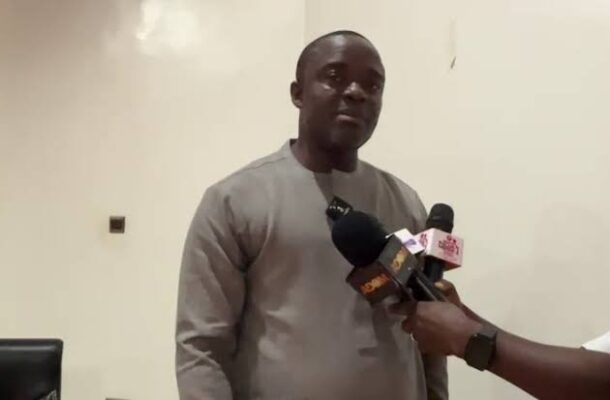
Former Minister of Local Government and Rural Development, Kwadwo Adjei Darko, has advocated a major overhaul of Ghana’s local governance framework, including the removal of Members of Parliament (MPs) from beneficiaries of the District Assemblies Common Fund (DACF).
According to Mr Adjei Darko, MPs should not receive allocations from the Common Fund because they are not voting members of District Assemblies.
He proposed that the portion of the DACF currently allocated to MPs should instead be channelled to elected Assembly Members to enhance development at the grassroots and strengthen Ghana’s decentralisation system.
Mr Adjei Darko made the proposal while speaking as the keynote speaker at the Conference of Ashanti Regional Presiding Members held in Kumasi.
Addressing the conference on the need to strengthen local governance, he argued that the current distribution of the Common Fund does not fully reflect the constitutional objective of decentralisation.
He said the arrangement also weakens the influence and effectiveness of Assembly Members, who are directly elected to represent the interests of communities at the local level.
Mr Adjei Darko traced Ghana’s decentralisation programme to 1988, when the Provisional National Defence Council (PNDC) established District Assemblies under PNDC Law 207.
He explained that although the reform transferred several responsibilities from central government to the districts, it did not provide sufficient financial resources to enable the local structures to effectively perform their functions.
He described the arrangement as largely “deconcentration” rather than genuine decentralisation.
According to him, the 1992 Constitution subsequently strengthened the decentralisation framework through the creation of the District Assemblies Common Fund under Article 252.
He also referenced Article 240, which requires Parliament to facilitate the transfer of functions, powers, responsibilities and resources from central government to local government institutions.
Despite these constitutional provisions, Mr Adjei Darko argued that Ghana has still not achieved full devolution of power.
He said genuine devolution would require local authorities to have greater autonomy, adequate financial resources and clear accountability for the decisions they take.
Presiding Members urged to prioritise development
Meanwhile, the President of the National Association of Local Authorities of Ghana (NALAG), Alfred Asiedu Adjei, has urged Presiding Members to put partisan political interests aside and concentrate on improving the lives of people in their communities.
He said local leadership should be judged by the tangible improvements leaders bring to their communities rather than by the positions or titles they occupy.
“Leadership is not measured by the authority we possess but by the positive change we inspire. Communities do not remember leaders for the titles they held; they remember them for the problems they solved,” he said.
Mr Asiedu Adjei described Presiding Members as an important part of Ghana’s local governance structure and said their role extends beyond chairing meetings of District Assemblies.
He encouraged them to use their positions to promote transparency, accountability, consensus-building and sustainable development within their respective assemblies.
He said effective leadership at the grassroots level requires Presiding Members to work collaboratively with other stakeholders and remain focused on addressing the needs of their constituents.




Popular News
No trending posts found.