
Importers and Exporters urge Banks to cut lending rates following drop in Ghana reference rate
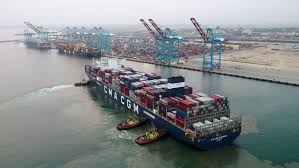
The Importers and Exporters Association of Ghana has called on commercial banks to reduce lending rates in response to the sharp decline in the Ghana Reference Rate, arguing that businesses should benefit from the country’s improving macroeconomic conditions.
The Association’s Executive Secretary, Samson Asaki Awingobit, said the benchmark rate’s drop from 14.58 percent in February to 10.02 percent in June should lead to lower borrowing costs, particularly for small and medium-sized enterprises (SMEs) and industries that depend on bank financing to expand operations and create jobs.
Speaking to Citi Business News, Mr. Asaki expressed concern that many commercial banks continue to charge lending rates between 18 and 24 percent despite the significant improvement in inflation and other key economic indicators.
“We should be expecting lending rates to come down further from 19%, maybe at least to 15 or 14% in order to reflect the Ghana Reference Rate,” he stated.
According to him, commercial banks use the Ghana Reference Rate and inflation trends as key factors in determining loan pricing. As such, businesses should begin to experience the benefits of the country’s economic recovery through more affordable access to credit.
Mr. Asaki also urged businesses seeking loans to negotiate more favourable terms with financial institutions, arguing that banks have little justification for maintaining high lending rates when benchmark indicators have fallen substantially.
He stressed that the gains recorded in stabilising the economy must be felt within the productive sectors through improved access to financing.
“The private sector should be the ultimate beneficiary of the progress made in the economy,” he said.
Commenting on the recent increase in inflation from 3.4 percent in April to 3.7 percent in May, Mr. Asaki described the rise as relatively modest and far below the double-digit inflation levels experienced in recent years.
While calling for greater clarity on the factors driving the increase, he maintained that the current inflation rate remains supportive of business growth and investment.
“Inflation at 3.7% is still on a good note,” he noted.
Mr. Asaki also endorsed government efforts aimed at reducing the country’s import bill, particularly food imports such as rice. He said strengthening domestic production would help retain more resources within the economy, create employment opportunities and enhance long-term economic resilience.
He further appealed to the Governor and management of the Bank of Ghana to ensure that reductions in the Ghana Reference Rate are effectively passed on through the banking sector.
“If the Bank of Ghana has worked hard to bring the reference rate to that point, then we should see a reflection in the commercial banks,” he added.
The Ghana Reference Rate serves as a benchmark for loan pricing and was introduced to improve transparency and consistency in lending practices across the banking industry.
With the latest reduction in the benchmark rate, businesses are expected to closely monitor whether commercial banks adjust their lending rates to reflect the changing economic environment.















Comments (0)