















Oil prices hold above $87 as hopes of a US-Iran deal fade
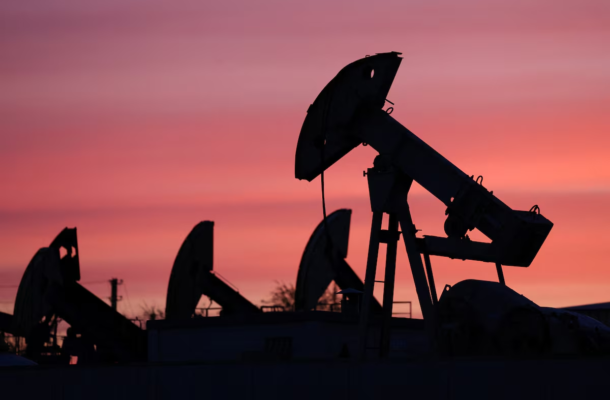
Oil prices held near more than one-week highs on Tuesday as expectations of a peace agreement between the United States and Iran weakened, raising doubts about when the Strait of Hormuz might reopen. The uncertainty increased after US President Donald Trump demanded compensation for damage incurred by the United States.
Brent crude futures were unchanged at $87.81 a barrel by 0013 GMT, while US West Texas Intermediate crude futures also held steady, at $82.20 a barrel.
Both benchmarks climbed by more than 5% on Monday, reaching their highest levels since 31 July. The rise followed Mr Trump’s response to Iran’s conditions for a peace deal, with the US president calling for Iran to compensate people killed in wars, attacks and protests.
That demand is expected to make efforts to secure an agreement and reopen the Strait of Hormuz more difficult. The strategic waterway is a key route for oil shipments.
Later on Monday, Mr Trump said the United States was in control of the strait and had cleared the strategically important oil route of Iranian mines.
“There appears to be a gulf, no pun intended, between the U.S. and Iran over what any agreement would actually look like,” said Tim Waterer, chief market analyst at KCM Trade.
“As a result, some of the optimism that built up last week is being unwound, giving oil prices a decidedly bid tone.”
The market was also affected by uncertainty surrounding the restart of Saudi Aramco’s Jazan refinery. The company has delayed the resumption of operations at the 400,000-barrel-per-day facility until 30 August after the Houthis claimed two attacks on the plant on Sunday.
Mr Waterer said the possibility of disruption around both the Strait of Hormuz and the Bab el-Mandeb remained a major concern for energy markets.
“The chokehold risk around both the Strait of Hormuz and the Bab el-Mandeb remains highly significant. Even intermittent restrictions or the threat of further incidents keep insurance costs elevated and force longer shipping routes … hence energy flows look likely to stay constrained near term,” Waterer said.
In a note published on Monday, analysts at Barclays said crude oil and refined product net exports through the Strait of Hormuz averaged 3 million barrels per day in the week ending 7 August. That was down from 4.4 million barrels per day in the previous week.
The reduction highlights the effect that restrictions and security concerns around the waterway are having on energy flows, while higher insurance costs and longer shipping routes continue to add pressure to the market.
Elsewhere, Iraq increased the September official selling price for Basra Medium crude shipped to Asia by $2.50. The price was set at $4 a barrel below the average of Oman and Dubai quotations.






Popular News
No trending posts found.