
Opposition NPP demands full accountability on vintage locomotive purchase
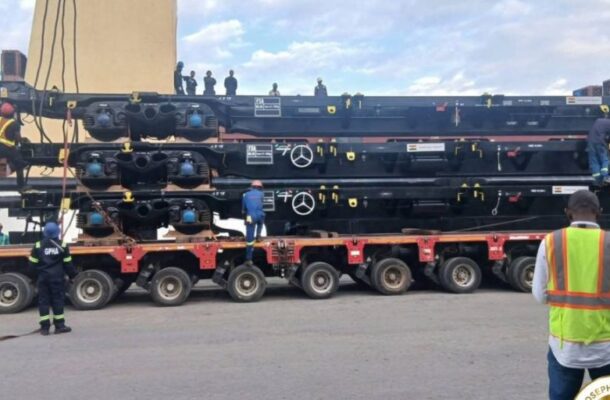
The New Patriotic Party has thrown down a challenge to the government over its decision to acquire a shipment of secondhand railway locomotives, demanding exhaustive transparency regarding their vintage, operational condition, acquisition price and prospects for sustained performance in Ghana’s transport network.
In a communiqué released by its Transport Sector Committee on June 25, the NPP acknowledged that efforts to reinvigorate rail freight represent a worthy ambition deserving recognition.
Yet the party contended that the administration has withheld crucial specifics necessary for citizens and policymakers to evaluate whether this particular procurement constitutes a prudent stewardship of public resources.
The statement welcomed any initiative aimed at buttressing the railway sector and easing congestion on highways choked by commercial vehicles.
However, it insisted that openness regarding asset quality and economic utility must accompany such investments.
Intelligence available to the opposition reveals that the two locomotives in question are reconditioned machines of British Rail Class 56 lineage — pieces manufactured between 1976 and 1983 in the United Kingdom and previously operated by Colas Rail before their acquisition by Ghana.
The NPP acknowledged that equipment restored to working condition can continue delivering service when subjected to rigorous maintenance regimens.
Yet it argued that Ghanaians are entitled to full particulars: the precise age of the machines, their prior operational record, the depth and scope of restoration work undertaken, realistic projections of remaining productive lifespan, and the full economic cost of operating and maintaining the assets through their projected useful life.
The party contextualised the British Rail Class 56 within railway history — machines designed and proven for heavy freight duties, respected for their hauling capacity yet now approaching the half-century mark.
Equipment of this generation typically demands more frequent servicing and generates elevated operational expenses relative to contemporary railway stock.
“The critical question is therefore not simply whether locomotives have arrived, but whether they represent the most sustainable and cost-effective solution for Ghana’s railway sector over the long term,” the NPP stated.
The opposition also flagged anxieties surrounding the availability of replacement components and technical servicing.
The British Rail Class 56 fleet has largely been phased out from active service across much of the developed world — a circumstance that complicates sourcing of spare parts and limits access to technical expertise.
The NPP pressed the administration to articulate its maintenance strategy: What sourcing arrangements exist for components? Has the government stockpiled critical replacements? What technical partnership agreements govern ongoing support? What domestic training initiatives will cultivate local competence in servicing and repair?
In comparing the current acquisition to the prior administration’s procurement of new-build Diesel Multiple Units from Poland, the NPP highlighted that those trains arrived fresh from the manufacturer and carried with them a comprehensive five-year maintenance and technical support agreement — provisions designed to facilitate the transfer of know-how and sustain operational reliability.
“The acquisition of refurbished Margaret Thatcher era locomotives should not be presented merely as a symbolic achievement.
Ghanaians deserve full disclosure regarding the age, cost and condition of the equipment, maintenance arrangements, spare parts availability and the government’s broader railway strategy,” the party concluded.
The opposition’s critique positions railway investment not as a matter of merely acquiring rolling stock, but as a long-term commitment requiring clarity on sustainability, cost-effectiveness and strategic alignment with national transport goals.





Popular News
No trending posts found.